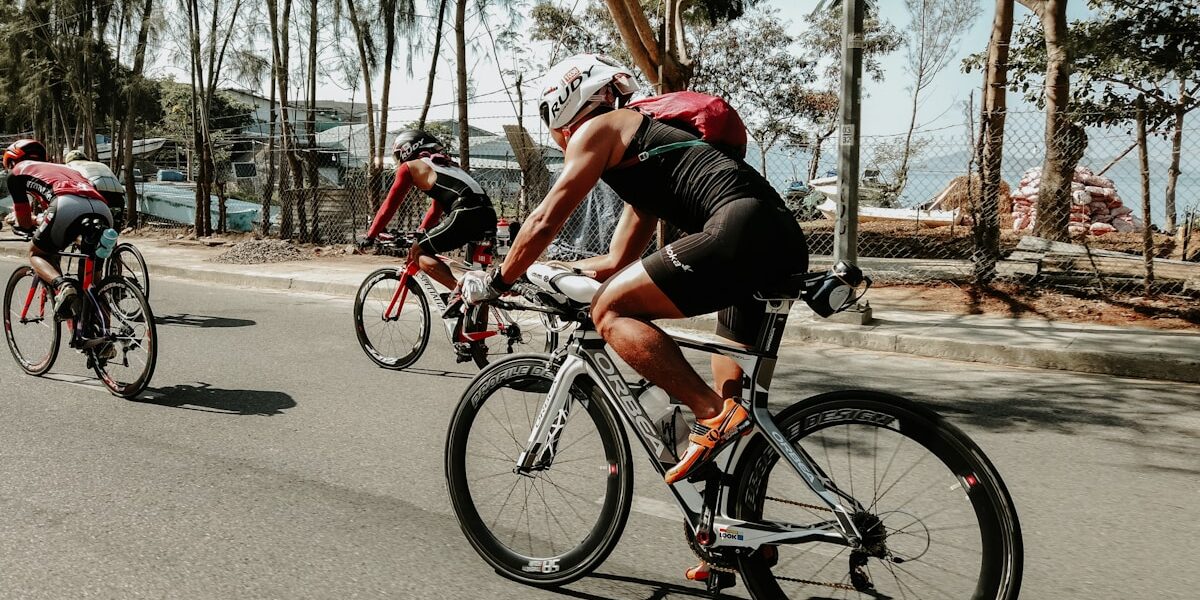
Triathlon Nutrition: From Training Fuel to Race Day Strategy
Triathlon nutrition has gotten complicated with all the supplement companies and sports scientists flying around with contradictory advice.
[foxdog-disclosure]
Nutrition can make or break your triathlon performance. While we often focus on swim technique, cycling power, and running efficiency, what you eat and when you eat it determines whether your body can execute on race day.
Understanding Energy Systems in Triathlon
Triathlon challenges all three of your body’s energy systems simultaneously, making nutritional demands uniquely complex among endurance sports.
Your phosphagen system handles the explosive efforts: diving off the start, accelerating out of corners, sprinting for the finish. This system runs on creatine phosphate and ATP stored directly in muscles. It is powerful but limited to about 10 seconds of maximum effort.
The glycolytic system powers sustained hard efforts lasting from 30 seconds to several minutes. This system burns muscle glycogen and blood glucose, producing lactate as a byproduct. Proper fueling keeps this system functioning optimally throughout your race.
The oxidative system dominates during the majority of triathlon racing. This aerobic system efficiently burns fats and carbohydrates to produce sustained energy. The better trained this system, and the better fueled it is, the faster you can race while burning primarily fat, saving precious glycogen for critical moments.
Daily Nutrition for Triathlon Training
Calculating Your Needs
Active triathletes require significantly more calories than sedentary individuals. A rough starting point: take your body weight in pounds, multiply by 15-18 depending on training volume and intensity. A 160-pound athlete training 10 hours weekly might need 2,400-2,900 calories daily.
Protein requirements increase with training load. Aim for 1.4-1.8 grams per kilogram of body weight daily, or about 0.6-0.8 grams per pound. This supports muscle repair and adaptation from training stress.
Carbohydrate needs vary by training phase. During high-volume training blocks, aim for 5-7 grams per kilogram of body weight. During lower-volume periods, 3-5 grams per kilogram is appropriate. Carbohydrates should primarily come from whole food sources: fruits, vegetables, whole grains, legumes.
Fat should comprise 20-30% of total calories, emphasizing unsaturated sources: olive oil, avocados, nuts, fatty fish. Fat is essential for hormone production, nutrient absorption, and sustained energy during lower-intensity efforts.
Meal Timing Around Training
Pre-workout nutrition depends on session duration and intensity. For early morning sessions under 90 minutes, training fasted or with a small snack works fine. For longer or harder sessions, eat 2-3 hours before: a meal containing 1-2 grams of carbohydrate per kilogram body weight with moderate protein and low fat.
During training, nutrition becomes important for sessions longer than 75-90 minutes. Aim for 30-60 grams of carbohydrate per hour from easily digestible sources: sports drinks, energy gels, chews, or real food like dates or bananas.
Post-workout nutrition accelerates recovery. Within 30-60 minutes of finishing, consume 0.3-0.5 grams of protein per kilogram body weight and 1-1.2 grams of carbohydrate per kilogram. This window is when your muscles are most receptive to rebuilding glycogen stores and repairing tissue.
Hydration Fundamentals
Dehydration impacts performance before you feel thirsty. Losing just 2% of body weight in fluids can decrease endurance performance by 10-20%. Monitor urine color – pale yellow indicates adequate hydration; dark yellow suggests you need more fluids.
Daily fluid needs vary dramatically by individual, climate, and training load. A baseline of half your body weight in ounces is a starting point, adjusted upward for heat, humidity, and training volume.
Electrolytes, particularly sodium, become critical during extended exercise in hot conditions. Most sports drinks contain adequate sodium for training under 90 minutes. Longer efforts or heavy sweaters may need additional supplementation of 500-1000mg sodium per hour.
Race Week Nutrition Strategy
Carbohydrate Loading Done Right
Carbohydrate loading is not about eating unlimited pasta the night before your race. It is a systematic increase in carbohydrate intake combined with training taper that maximizes glycogen storage in muscles and liver.
Probably should have mentioned this earlier, but I made that exact mistake before my first half-iron distance race. The pasta party was not the answer.
Begin 3-4 days before your race. Increase carbohydrate intake to 8-10 grams per kilogram of body weight while reducing training volume. Choose easily digestible carbohydrates: white rice, pasta, bread, potatoes, low-fiber cereals. This is not the time for high-fiber whole grains that may cause gastrointestinal distress.
Expect weight gain of 2-4 pounds. This is glycogen and associated water storage – exactly what you want. Each gram of stored glycogen holds 3-4 grams of water, which will be used during racing.
The Pre-Race Dinner Myth
Forget the traditional massive pasta dinner. Your pre-race dinner should be moderate in size, familiar, easily digestible, and eaten early enough to allow complete digestion before sleep.
Choose foods you know agree with your stomach. White rice, chicken, pasta with simple sauce, potatoes, and cooked vegetables are safe choices. Avoid spicy foods, high-fiber foods, excessive fat, and anything new.
Eat early – ideally finishing dinner by 6 PM for a morning race. Going to bed with an uncomfortably full stomach disrupts sleep and can cause morning gastric distress.
Race Morning Breakfast
Eat breakfast 3-4 hours before race start. This allows complete digestion and liver glycogen replenishment from overnight fasting. Aim for 1-2 grams of carbohydrate per kilogram body weight with minimal fat and fiber.
Proven race breakfast options include: white toast with honey and banana; rice cakes with almond butter; oatmeal made with water, not milk; sports bars specifically designed for pre-race consumption.
Top up with a small snack 60-90 minutes pre-race if needed: a gel, banana, or sports drink. This prevents blood sugar dips that can occur after early breakfast.
Race Fueling: The Hour-by-Hour Guide
The Swim
You cannot effectively take in nutrition during the swim. Focus on proper pre-race fueling and arrive at T1 with adequate energy stores. Some athletes take a gel or concentrated sports drink 10 minutes before the swim start for quick-access energy during the bike.
T1 and Early Bike
The first 15-20 minutes on the bike is often rough for the stomach. Blood has been diverted to working muscles during the swim and has not fully returned to the digestive system. Begin with sipping sports drink only – save solid nutrition for when you have settled into a rhythm.
The Bike Leg
Cycling is your primary fueling opportunity. Aim for 60-90 grams of carbohydrate per hour for races longer than 90 minutes. For shorter Olympic distance races, 30-60 grams per hour is sufficient.
I am apparently one of those people who needs more calories than the guidelines suggest, and 80 grams per hour works for me while 60 grams per hour left me bonking on the run every single time.
Practice your exact race nutrition during training. Know exactly what products you will use, when you will take them, and how your body responds. Race day is not for experiments.
Spread intake across the bike leg rather than taking large amounts at once. Sip sports drink every 10-15 minutes. Take a gel or chew every 30-45 minutes. This steady intake prevents blood sugar spikes and crashes while maintaining stable energy.
Set reminders or use landmarks on the course. When racing hard, it is easy to forget to eat. By the time you feel hungry, you are already behind on nutrition and recovery becomes difficult.
T2 and Early Run
Take your final bike nutrition 10-15 minutes before dismounting. This allows absorption before the jostling of running begins. A gel in the last kilometers of the bike is a common strategy.
The first mile of running often feels terrible regardless of nutrition. Running on a stomach that has been processing fuel for an hour or more creates temporary discomfort. Start slowly, focus on form, and let your system adjust.
The Run Leg
Running nutrition is inherently more challenging than cycling nutrition. Impact and core engagement make the stomach less tolerant. Many athletes reduce or eliminate solid nutrition during the run, relying on sports drinks and gels only.
Take advantage of aid stations for hydration. Small sips of sports drink are generally well-tolerated. Colas offer quick sugar and caffeine for the back half of longer runs. Water with salt tablets works for athletes with sensitive stomachs.
If your stomach protests completely, skip nutrition and focus on finishing. Arriving at the finish line slightly under-fueled is far better than stopping mid-course with gastric shutdown.
Special Nutrition Considerations
Heat Racing
Hot conditions dramatically increase fluid and electrolyte needs. Sweat rates can exceed 2 liters per hour in extreme heat, with significant sodium losses. Pre-cool with cold fluids and ice, increase sodium intake during the race, and take advantage of cooling stations.
Gastric emptying slows in heat, making solid nutrition harder to tolerate. Shift toward liquid calories: concentrated sports drinks, gels with water, electrolyte solutions with added carbohydrates.
Cold Racing
Cold weather reduces thirst sensation while maintaining fluid needs. Force yourself to drink on schedule even when you do not feel thirsty. Cold conditions may allow more solid food tolerance as blood flow to the digestive system is less impacted.
Long Course Specifics
Ironman and 70.3 distances require serious caloric intake – 400-600 calories per hour is common for long course racing. This cannot come from gels alone. Include real food: sandwiches, energy bars, bananas, pretzels, whatever your stomach tolerates during extended effort.
Caffeine becomes more important in long course racing for both performance and gut motility. Many athletes consume 100-200mg of caffeine at regular intervals throughout the race day.
Troubleshooting Common Nutrition Problems
Nausea and Vomiting
Usually caused by too much nutrition too fast, dehydration, or overheating. Stop eating temporarily, focus on small sips of water, back off intensity if possible. Prevention: practice race nutrition during training at race intensity.
Side Stitches
Often related to timing of pre-race meal or drinking too much at once. Prevention: finish eating 3+ hours before start, take small frequent sips rather than gulping, strengthen core muscles.
Bonking
Running out of glycogen causes dramatic performance drop and mental fog. Prevention: adequate carbohydrate loading, consistent in-race fueling. Treatment: immediately take in quick sugars and reduce intensity until blood sugar stabilizes.
Cramping
Multiple causes including electrolyte imbalance, dehydration, and neuromuscular fatigue. Prevention: adequate sodium intake, proper hydration, training appropriately for race demands. Treatment: slow down, stretch gently, take in sodium and fluids.
Building Your Personal Nutrition Plan
Every athlete is different. The guidelines in this article are starting points for your own experimentation. Keep a nutrition log during training, noting what you ate, when, and how you felt. Identify patterns: what works, what causes problems, what gives you energy.
Practice race nutrition during your longest and hardest training sessions. If something works in a tired state during training, it will likely work on race day. If something causes problems at training intensity, it will be worse at race intensity.
Have a backup plan. What will you do if your primary nutrition causes problems? Know what products will be available on the course. Practice using those products so they are not completely foreign if you need them.
The goal is arriving at the finish line having delivered exactly the fuel your body needed – not too much, not too little, at the right times in the right forms. This takes practice, attention, and willingness to learn from both successes and failures. But nailed nutrition can be the difference between your best race and your worst.

Stay in the loop
Get the latest triathlete today updates delivered to your inbox.