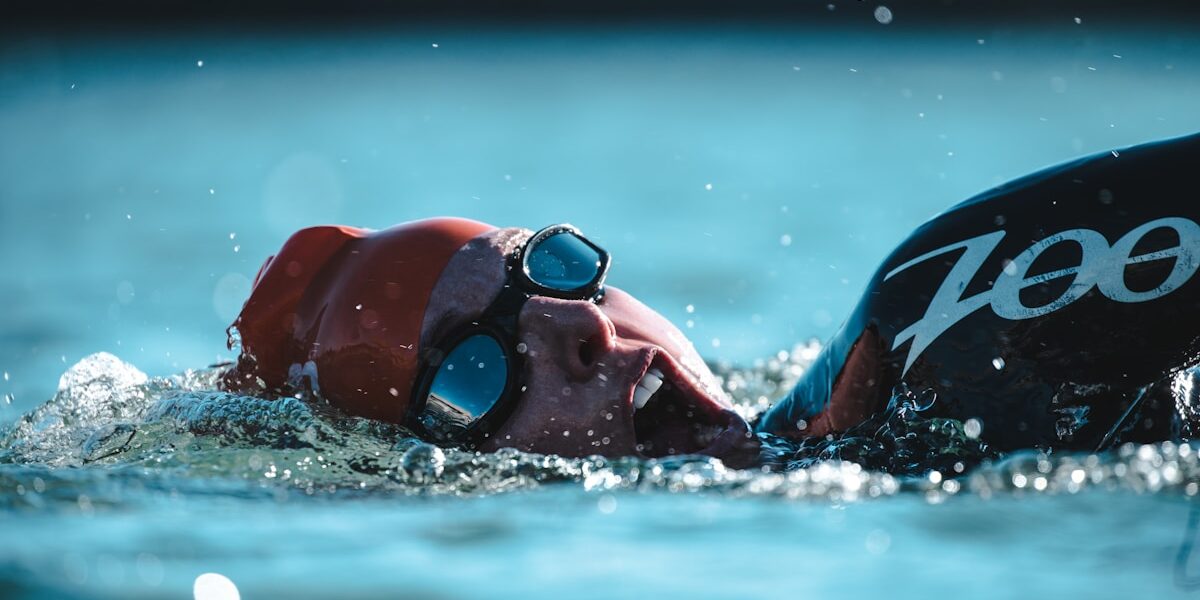
Swimming in triathlon has gotten confusing with all the conflicting advice flying around.
The swim portion of triathlon intimidates more athletes than any other discipline. Former runners and cyclists often struggle in the water, while strong swimmers wonder why their pool speed does not translate to open water. This guide addresses both technical improvement and the mental challenges we all face.
Why Triathlon Swimming Is Its Own Beast
Pure swimmers train for optimal speed over specific distances in controlled pool conditions. We have different requirements. We need to swim efficiently – not necessarily fast – while preserving energy for the bike and run ahead. We must navigate open water, sight buoys, and swim in close proximity to hundreds of other athletes.
This fundamental difference means triathlon swimming technique has unique priorities. Efficiency and energy conservation matter more than raw speed. Open water skills often matter more than pool time. I wish someone had told me this before I spent six months trying to develop a competitive pool stroke.
Fundamental Technique Improvements
Body Position
Good body position in the water reduces drag and makes every stroke more efficient. Your body should be horizontal with your hips and legs near the surface. Many triathletes swim with their hips and legs dragging low, creating enormous resistance.
To improve body position, focus on keeping your head neutral. Look straight down at the pool bottom, not forward. When you lift your head to breathe, rotate your entire body rather than lifting your head independently.
A slight press on your chest helps lift your hips. Think about swimming downhill – your head and chest slightly lower than your hips. This counterintuitive position actually makes forward movement easier. I am apparently one of those people who needs constant reminders about this, and pressing down on my chest works for me while thinking about lifting my hips never did.
Catch and Pull
The catch is when your hand enters the water and begins applying pressure backward. Many swimmers skip this phase entirely, immediately pushing down rather than back. This wastes energy and provides minimal forward propulsion.
After your hand enters the water, extend forward fully before beginning the catch. Your fingertips should point toward the pool bottom as you begin pulling. Keep your elbow high throughout the pull phase.
Pull through the center of your body, not around the outside. Your hand should pass under your belly button and continue to your hip before exiting the water. A complete pull uses your entire arm, back, and core muscles.
Rotation
Efficient swimming uses body rotation rather than arm strength alone. Your shoulders should rotate 30-45 degrees with each stroke, and your hips should follow. This rotation engages your larger back and core muscles while reducing shoulder strain.
Think of your body as a single unit rotating around a central axis that runs from your head through your spine. Both sides should rotate equally. Asymmetric rotation often causes athletes to swim off-course.
Kick
For triathletes, the kick serves primarily for balance and rotation assistance rather than propulsion. A powerful flutter kick burns energy that you will need later. A gentle two-beat kick provides balance while conserving leg muscles for the bike and run.
Your kick should originate from your hips, not your knees. Keep your ankles loose and your toes pointed. If you see significant splash from your feet, you are likely kicking too hard or bending your knees too much.
Breathing and Sighting
Bilateral Breathing
Breathing every three strokes creates symmetric rotation and helps you swim straighter. It also prepares you for race conditions where waves or other swimmers may block breathing on one side.
If breathing every three strokes feels too challenging initially, work up to it gradually. Start with one length breathing right, the next breathing left. Eventually progress to true bilateral breathing.
Efficient Breathing Technique
When you turn to breathe, one goggle should remain in the water. Your mouth finds air in the trough created by your head moving through the water. Lifting your head too high disrupts body position and creates drag.
Exhale continuously while your face is in the water. This means you are exhaling during the entire stroke cycle, not holding your breath and then explosively exhaling before inhaling. Continuous exhalation keeps you relaxed and makes inhaling quick and natural.
Sighting in Open Water
Pool swimming allows you to follow the black line. Open water requires regular sighting of buoys, landmarks, or the shore. Poor sighting costs time through extra distance and mental energy through anxiety about your position.
Incorporate sighting into your breathing rhythm. As you rotate to breathe, lift your eyes briefly forward before turning your head to the side. This technique adds minimal disruption to your stroke.
Practice sighting in the pool by swimming with your eyes closed for 4-6 strokes, then lifting your head to check your position. You will likely be surprised how much you drift without constant visual reference. I certainly was.
Open Water Specific Skills
Mass Swim Starts
The first minutes of a triathlon swim can feel chaotic. Hundreds of athletes enter the water simultaneously, creating a churning mass of arms and legs. Anxiety during this phase causes many athletes to abandon their race.
Practice is essential. Participate in open water group swims whenever possible. Learn to stay calm when contact happens – it will happen. Focus on your own stroke rather than what is happening around you.
Positioning strategy matters. If you are not a confident swimmer, start to the side or back of your wave. A few extra seconds at the start is better than panic. Strong swimmers can start at the front to avoid traffic.
Navigation
Swimming the shortest possible line between buoys requires constant awareness. Sight more frequently at the beginning when you are fresh and can afford the slight technique disruption.
Use landmarks on shore as sighting references. These are often easier to see than small buoys. Line up a buoy with a larger landmark behind it for a clearer navigation target.
If you find yourself consistently drifting one direction, adjust by aiming slightly the opposite way. Small corrections throughout the swim cost less than a major course correction.
Drafting
Swimming behind or beside another athlete can reduce your effort by up to 20 percent. Legal in most triathlons, drafting is an essential skill for competitive swimmers.
The best drafting position is at another swimmer’s hip, slightly behind. You will feel reduced resistance and can maintain pace with less effort. Drafting directly behind feet works too but risks getting kicked.
Find a swimmer slightly faster than your comfortable pace. The energy savings from drafting compensate for the slightly higher speed. If they are pulling away, do not chase – find another draft group at your pace.
Pool Training for Open Water Success
Structured Workouts
Effective swim training includes variety: technique drills, short intervals at high effort, longer sustained efforts at race pace, and easy recovery swimming. A typical week might include three sessions.
Example interval set: 10 x 100 meters on 1:45 interval, holding consistent pace. This teaches you to swim at a specific effort level repeatedly.
Example endurance set: 2000 meters continuous, practicing race pace and regular sighting. Every 200 meters, lift your head to sight an imaginary buoy. This builds the endurance base you will need on race day.
Essential Drills
Catch-up drill: Complete one full stroke before beginning the next. Both hands should meet at full extension before the next stroke starts. This drill emphasizes full extension and complete strokes.
Fingertip drag: During recovery, drag your fingertips along the water’s surface. This drill promotes high elbows during recovery and helps develop a relaxed arm motion.
Single-arm drill: Swim using only one arm while the other remains extended. Complete 25 meters with each arm. This drill isolates each arm’s catch and pull mechanics.
Open Water Practice Sessions
Pool training alone does not prepare you for race conditions. Regular open water practice addresses skills that pools cannot simulate: temperature adjustment, sighting real buoys, swimming without lane lines, and managing anxiety.
Never swim alone in open water. Join a triathlon club or find training partners. Wear a bright swim cap and consider a safety buoy that floats behind you.
Practice entries and exits too, including the transition from swimming to running up the beach.
Overcoming Fear and Anxiety
Open water anxiety affects even experienced swimmers. The inability to see the bottom, wildlife concerns, temperature shock, and crowded conditions all trigger stress responses.
Gradual exposure works best. Start with short open water sessions in calm conditions. Gradually increase duration and introduce more challenging conditions. Each successful swim builds confidence for the next.
Develop coping strategies for race day anxiety. Deep breathing before entering the water activates your parasympathetic nervous system. Positive self-talk redirects negative thoughts.
Have a bail-out plan. Know that you can roll onto your back and float if panic strikes. You can raise your arm for kayak support if needed. Having escape options often prevents needing them.
Putting It All Together
Swimming improvement takes patience. Unlike running or cycling, where fitness gains come relatively quickly, swimming technique develops over months and years. Trust the process and celebrate small improvements.
Record yourself swimming periodically. Video reveals technique flaws invisible to your own perception. Share footage with coaches or experienced swimmers for feedback.
Make swimming a consistent habit. Three 45-minute sessions per week produces faster improvement than one 2-hour session weekly. Frequency builds neurological adaptations that improve technique.
Remember: your goal is to exit the water ready to race. Fast splits mean nothing if you have exhausted yourself before the bike. Swim smooth, swim relaxed, and save your energy for the 100+ miles ahead.

Stay in the loop
Get the latest triathlete today updates delivered to your inbox.