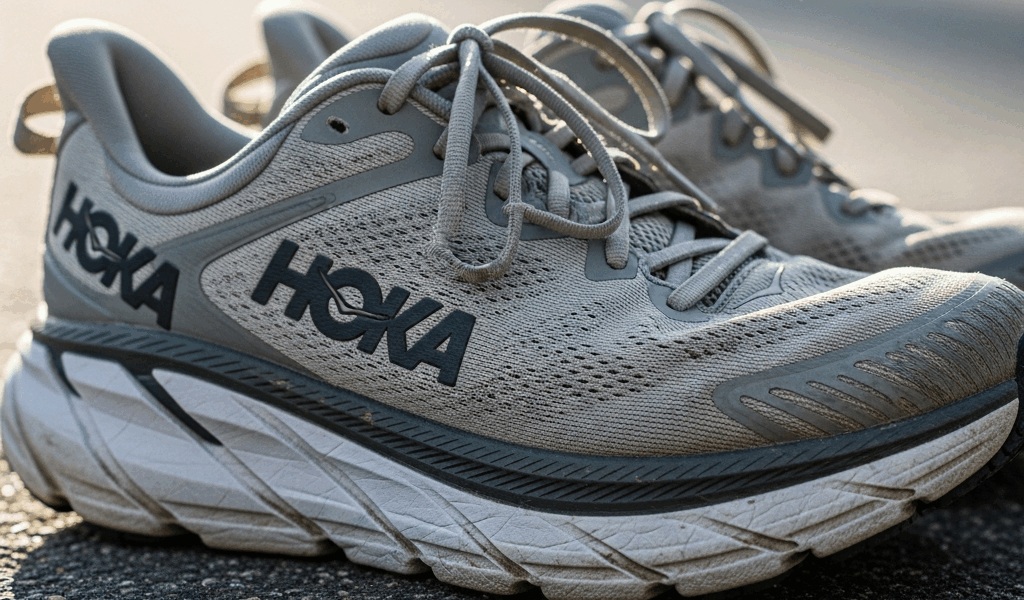
Your Hokas still look fine from the outside, but something feels off on your runs. More impact rattling through your knees. That bouncy-cloud feeling you paid good money for has gone flat. You’re standing in the closet wondering if they’re done or if you’re just having a bad training week.
[foxdog-disclosure]Probably not a bad week. Here’s how long Hoka shoes actually last, broken down by model, plus the specific wear signs to watch for.
How Many Miles Do Hoka Shoes Last? By Model
The generic answer floating around the internet is “300 to 500 miles.” True enough, but completely useless when different Hoka models use different foam compounds, different outsole rubber, and different stack heights. A Clifton and a Bondi are not the same shoe. Here’s what each one actually gives you:
Hoka Clifton: 300 to 400 miles. Lighter foam to hit that feathery weight means the cushioning compresses faster. If you’re north of 180 pounds or you’re a hard heel-striker, budget for the low end of that range. My last pair of Clifton 9s started feeling dead around 320.
[foxdog-inline-cta asin=”B0BQ6X438M” title=”Hoka Clifton 9 Running Shoes” tag=”triathletetoday-20″]Hoka Bondi: 400 to 500 miles. The Bondi packs in more midsole material than any other shoe in the lineup, so it simply has more foam to work through before bottoming out. It’s the marathon partner of Hoka daily trainers — slower to break down, which partly justifies the price tag.
Hoka Speedgoat: 300 to 400 miles on actual trail surfaces. Bring a Speedgoat onto pavement and those aggressive Vibram lugs chew down fast — expect 200 to 250 miles if you’re mixing surfaces. The foam holds up fine; it’s the outsole that gives out first.
Hoka Mach: 250 to 350 miles. Built lighter for tempo days and faster workouts. Keep it in that role and it’ll serve you well. Use it as your everyday trainer and you’ll blow through the cushioning in two months of consistent running.
Hoka Rincon: 250 to 300 miles. Hoka’s lightest road shoe, and durability is what they sacrificed to get there. Minimal outsole coverage means exposed foam hits the ground directly. Rotate it with something sturdier.
Signs Your Hoka Shoes Are Worn Out
Here’s the frustrating thing about Hoka shoes specifically: the visual wear checks that work for other brands often miss the mark. A pair of Cliftons can look clean and nearly new from the outside while the midsole is internally compressed and doing nothing for you. The foam gives up well before the upper shows damage.
What to actually watch for:
The rocker feels flat. That distinctive Hoka meta-rocker geometry is supposed to roll you smoothly through your stride. When the foam compresses unevenly — almost always under the heel and forefoot first — that rolling sensation vanishes. If your Hokas feel like regular flat shoes instead of guiding you forward, the midsole is done.
Visible midsole creasing. Hold the shoe at eye level and look at the midsole from the side. Deep horizontal creases, especially around the heel area, mean the foam has permanently folded. Minor creasing after 50 miles is normal. Deep grooves that don’t recover overnight? Those shoes are finished.
Heel counter collapse. Squeeze the back of the shoe where it cups your heel. It should feel firm and structured. If it caves in easily or tilts to one side, you’re getting zero support back there. Your foot is sliding around way more than it should be on each stride.
Your legs know first. Calves, shins, or knees feeling noticeably more beat up after familiar routes at familiar paces? Your body is absorbing the impact that your shoes used to handle. This symptom is subjective, but I’ve found it to be the most reliable early warning sign.
Does Running Surface Affect Hoka Lifespan?
More than most runners realize, and not just in the obvious trail-versus-road way.
Concrete vs asphalt: Concrete is roughly ten times harder than asphalt. If your regular route is mostly sidewalk, your foam compresses measurably faster than someone doing the same weekly mileage on asphalt roads. This hits Hoka shoes harder than some other brands because the thick, tall midsole has so much foam being subjected to that impact.
Treadmill: The belt has give — way more than any outdoor surface. Treadmill miles are easier on shoe foam across the board. If you split your training between treadmill and road, your Hokas will outlast the model-specific ranges above.
Trail shoes on pavement: Taking your Speedgoat onto the road to connect trailheads? Those soft outsole lugs were designed for dirt, mud, and rock. Even a mile or two of road running per session adds up over a training cycle. It’s the fastest way to kill an expensive trail shoe prematurely.
When to Replace Hoka Shoes: The Practical Test
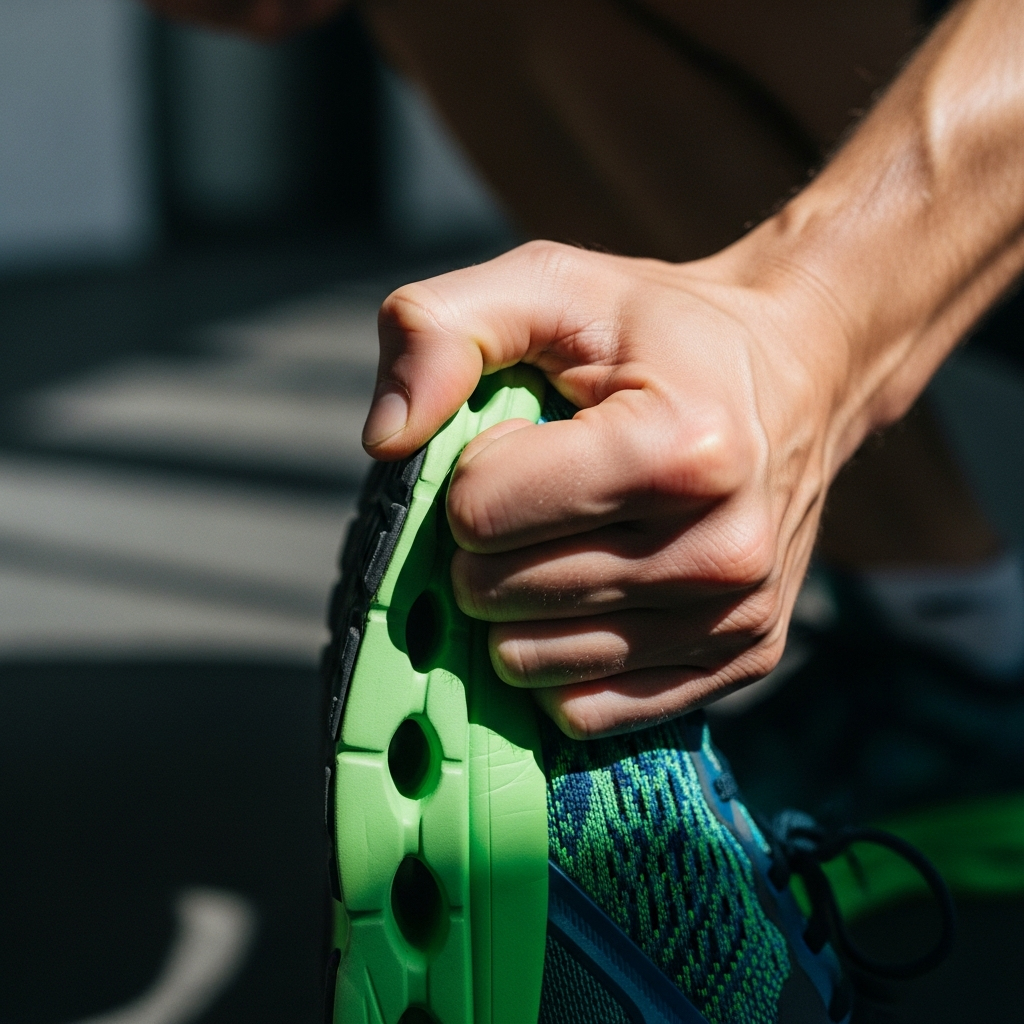
Not sure whether your Hokas are truly done? Two tests that actually work:
The thumb press: Push your thumb hard into the midsole of your worn pair. Then do the same on a fresh pair — try one on at a running store, or compare against a friend’s newer shoes. If your pair feels dense and dead where the new foam feels springy and responsive, the cushioning has given out. The difference is usually obvious.
The comparison run: Borrow or buy a fresh pair of the same model and run your usual route. If the cushioning difference hits you immediately — if you can feel how much more impact your old pair had been passing through to your legs — that’s your answer. Most runners who try this are genuinely surprised at how much protection they’d lost without realizing it.
Track your mileage. Use the model ranges above as a baseline, and start checking the wear signs once you cross the lower threshold. With Hoka especially, your body will raise the alarm before your shoes look worn out.




Stay in the loop
Get the latest triathlete today updates delivered to your inbox.