
You dismount at T2, rack the bike, pull on your running shoes, and the first quarter mile feels like your hips are made of concrete. That deep, tight ache across the front of your hip joints is your hip flexors telling you they have been locked in a shortened position for the last two hours of cycling and they are not thrilled about suddenly being asked to extend for a 10K.
Hip flexor tightness and pain is one of the most common complaints among triathletes, and it gets worse as your bike leg gets longer. Here is why it happens, what to do about it right now, and how to keep it from limiting your run split.
Why Cycling Destroys Your Hip Flexors
Your hip flexors — primarily the iliopsoas and rectus femoris — are responsible for pulling your thigh up toward your torso. On the bike, they fire every single pedal stroke to lift your knee through the top of the rotation. At 90 RPM for two hours, that is roughly 10,800 contractions per leg. But here is the part that causes the damage: at no point during the pedal stroke do your hip flexors ever fully extend. The range of motion is restricted to a shortened window, and your muscles adapt to that compressed position in real time.
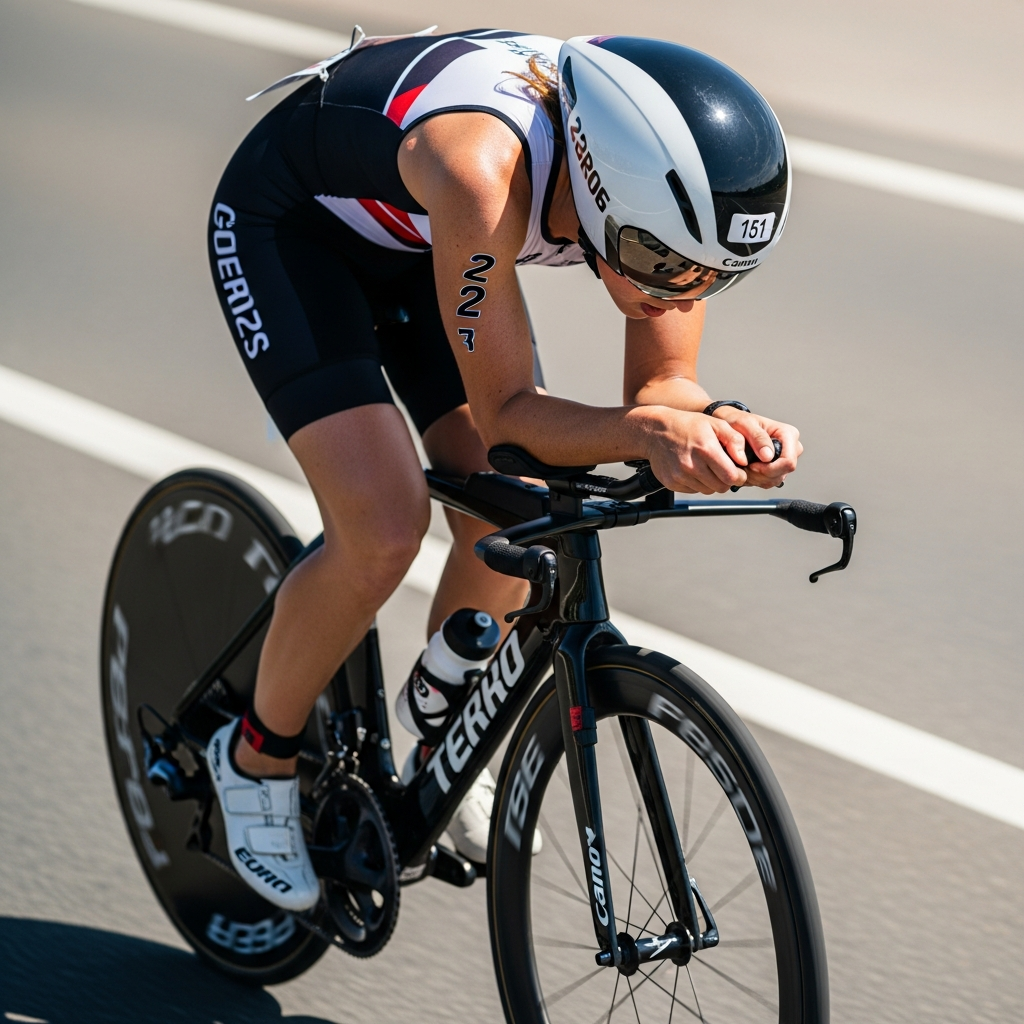
The aero position makes it worse. When your torso folds forward over the top tube, the angle at your hip joint decreases further. Your hip flexors are now working hard while already shortened — contracting from a position that most physical therapists would call a stretch deficit. After 56 miles in the aerobars, those muscles have effectively shortened themselves temporarily, and they resist lengthening when you try to stand upright and run.
This is not an overuse injury in the traditional sense. It is a positional adaptation that happens during every long ride. The question is not whether it happens — it is whether you are doing enough outside of training to counteract it.
The Bike-to-Run Problem
T2 is where hip flexor tightness becomes a performance issue. You spend the entire bike leg with your hips in partial flexion, and then you immediately switch to running — a movement that demands full hip extension on every stride. Your hip flexors need to lengthen through a range they have not used in hours, and they resist.
This is why the first mile after T2 feels so bad. Your stride is shortened because your hips will not open up. You feel like you are shuffling instead of running. Your lower back starts complaining because it is compensating for the limited hip extension by overarching. And your pace suffers — sometimes by 30 to 60 seconds per mile compared to a fresh run off the couch.
Most triathletes just grit through this and wait for the legs to loosen up around mile two. That works, but it costs time and increases injury risk. A better approach is addressing the tightness before it locks in — both during the ride and in your regular training.
One thing that helps immediately: in the last two miles of the bike leg, stand out of the saddle for 10 to 15 seconds every minute. This allows your hip flexors to move through a longer range of motion and breaks the sustained shortened position. You lose a few watts of power, but you gain a significantly better first mile on the run.
Four Stretches That Actually Help
These are the four stretches that make the biggest difference for triathlete hip flexor tightness. Do them consistently — not once before a race, but three to four times per week year-round — and you will notice a measurable difference in how your hips feel at T2.
Kneeling hip flexor stretch. Drop into a lunge position with your rear knee on the ground (use a pad or folded towel). Keep your torso upright. Squeeze the glute on the rear leg — this is critical because the glute contraction forces the hip flexor to release through reciprocal inhibition. Hold for 30 seconds per side. Do 3 sets. This is the single most effective stretch for cycling-related hip flexor tightness.
Standing quad pull with glute squeeze. Stand on one leg, grab your opposite ankle behind you, and pull your heel toward your glute. Squeeze the glute on the same side as you hold the stretch. This targets the rectus femoris, which crosses both the hip and knee joints and gets particularly tight from cycling. Hold 20 seconds per side, 2 sets.
Lying figure-four stretch. Lie on your back with both knees bent. Cross your left ankle over your right thigh just above the knee. Flex your left foot. Reach behind your right thigh and gently pull both legs toward your chest. This opens the deep external rotators and hip capsule, relieving pressure that contributes to that locked-up feeling. Hold 30 seconds per side, 2 sets.
Couch stretch. Kneel facing away from a wall or couch. Place the top of your rear foot against the wall behind you with your shin running up the wall surface. Step your front foot forward into a lunge. Keep your torso upright and squeeze the rear-side glute. This is the most aggressive hip flexor stretch in this list and targets the deep iliopsoas that the kneeling stretch sometimes misses. Hold 30 seconds per side, but start with 15 if you are very tight. Build up over weeks.
When to do them: Post-ride is the highest priority — your hip flexors are warm and in their most shortened state. Pre-run is second priority, especially before brick sessions. A dedicated mobility session on rest days rounds it out. Do not do aggressive static stretching immediately before cycling — dynamic warmups are better pre-ride.
Bike Fit Adjustments That Reduce Hip Strain
Stretching addresses the symptoms. Bike fit addresses the root cause. Three fit variables directly affect how much your hip flexors suffer during a long ride.
Saddle height. If your saddle is too high, your hip flexors overreach at the bottom of the pedal stroke while your pelvis rocks side to side to compensate. This creates a stretch-contract cycle that accelerates tightness. If your saddle is too low, your hip angle at the top of the stroke is more acute — compressing the flexors even further. The sweet spot is typically where your knee has a slight bend (25 to 30 degrees) at the bottom of the stroke with your heel on the pedal.
Saddle fore-aft position. A saddle pushed too far forward increases the flexion angle at your hip throughout the entire pedal stroke. Moving it back 5 to 10 millimeters can open up the hip angle meaningfully without changing your power position. If you have been chasing an aggressive TT position, this is often the first adjustment a bike fitter makes for athletes complaining of hip flexor pain.
Aero position aggressiveness. There is a point of diminishing returns where a lower front end saves watts aerodynamically but costs you hip function on the run. If you are racing 70.3 or full Ironman distances, a slightly higher stack height that opens your hip angle by even 5 degrees can save you minutes on the run that you would never recover in aero savings on the bike. The fastest overall race time is not always the fastest bike split.
When to See a Professional
Normal hip flexor tightness from cycling resolves within a day or two of rest combined with the stretching protocol above. If it does not, you may be dealing with something beyond positional tightness.
See a sports medicine professional or physical therapist if you experience pain at rest (not just stiffness after riding), a clicking or catching sensation in the hip joint, pain that wakes you up at night, or limited range of motion that is not improving after two weeks of consistent stretching.
These can be signs of a hip flexor strain, a labral tear, or impingement (femoroacetabular impingement, or FAI). Labral tears in particular are more common in cyclists and triathletes than the general population because of the repetitive loaded flexion pattern. They do not heal on their own and will get worse if you keep training through them.
A good sports PT can differentiate between positional tightness and structural damage in one visit. Do not spend three months stretching a torn labrum — get it evaluated early if it is not responding to the basics.



Stay in the loop
Get the latest triathlete today updates delivered to your inbox.