Race morning preparation has gotten confusing with all the conflicting advice about timing and routines flying around. As someone who has fumbled through twenty races across sprint to Ironman distances, I learned everything there is to know about what actually works and what wastes precious mental energy. Today, I will share it all with you.
Race morning chaos derails more triathletes than poor training ever does. The hours between waking and the starting gun determine whether months of preparation produce good results or disappointing performances.
My race morning routine has evolved into a precise sequence that eliminates decision-making and reduces stress.
The Night Before
Race morning actually starts the previous evening. Lay out every piece of equipment you will need. Bike shoes, run shoes, helmet, goggles, wetsuit, race belt, nutrition – everything arranged in order of use. Check tire pressure and test shifting one final time.
Probably should have led with this section, honestly. I once forgot my bike shoes because I assumed I would remember to grab them. Set multiple alarms. Phones die overnight. Alarm clocks get knocked off nightstands. Backup alarms prevent disaster. Add 15 minutes buffer to your wake-up time for unexpected delays.
Eat a familiar dinner early enough to digest fully before sleeping. Nothing new, nothing spicy, nothing that might upset your stomach. Hydrate normally but stop drinking two hours before bed to minimize overnight bathroom trips.
First Hour After Waking
Wake at least three hours before your start time for sprint races, four hours for Olympic and longer. This allows full digestion of pre-race breakfast and time to address any problems.
Eat breakfast immediately after waking. Your race day meal should be something you have tested repeatedly during training. I am apparently one of those people who needs the same exact breakfast every race – oatmeal with banana and a touch of honey – and that works for me while experimenting never has.
Use the bathroom as many times as necessary. Nervous energy increases urgency. Get everything out of your system before leaving for the race venue. Portable toilets at venues have long lines and added stress.
Arriving at the Venue
Arrive at least 90 minutes before your wave start. Earlier is better for major events where parking fills quickly. Allow extra time for any race requiring shuttle buses from parking areas.
Pick up your race packet first if you did not collect it the day before. Body marking takes time in long lines. Some races require you to show your marked numbers before entering transition.
Walk the transition area before setting up your gear. Identify your rack position relative to the swim entry and bike exit. Note landmarks like banners or poles that help you locate your spot during the race when your brain is foggy.
Transition Setup
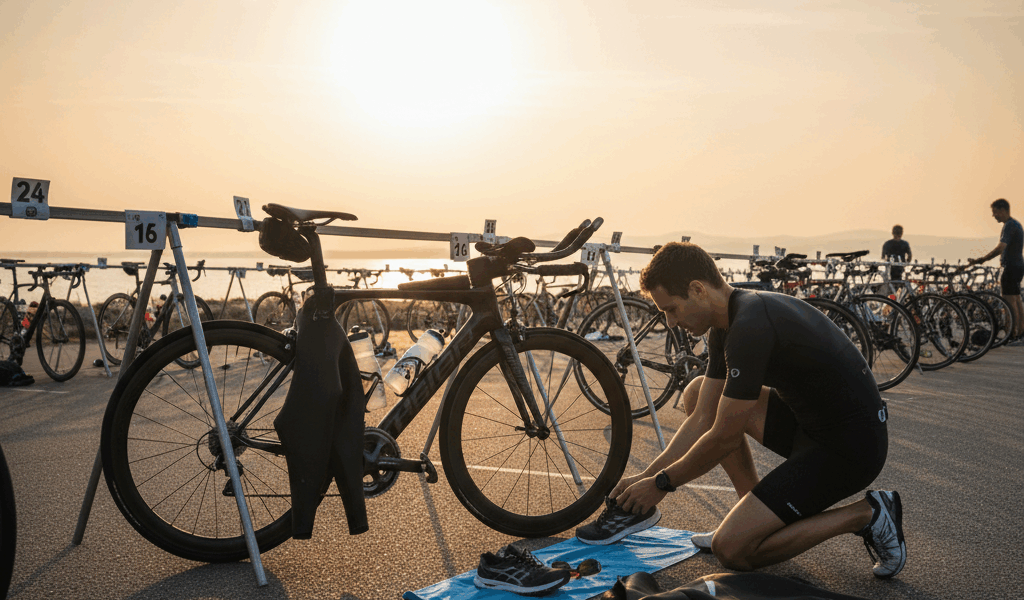
Arrange your transition area with intention. Place items in order of use from left to right. Everything should be visible at a glance – no digging through bags during the race.
That is what makes transition setup endearing to us obsessive planner types – you can control this chaos before the chaos starts. Lay a brightly colored towel to mark your spot. This helps you find your position when running in from the swim. Some athletes use vertical markers like colored tape on their seat post.
Triple-check your helmet chin strap is unfastened but ready to clip. Touching your bike with an unfastened helmet means disqualification. Many athletes clip and unclip their helmet multiple times to confirm the reflex is ready.
The Final Hour
Begin warming up 30-40 minutes before your start. Light jogging, arm circles, and dynamic stretches increase blood flow without depleting energy. Some athletes benefit from a brief swim warm-up if the venue allows.
Bathroom one final time at the 30-minute mark. Lines are shortest early. Waiting until the last minute adds stress you do not need.
Put on your wetsuit 15-20 minutes before entering the water. This allows time for the suit to warm with your body heat. Apply anti-chafe lubricant to your neck and wrists where the suit might rub.
Position yourself in your wave group based on your expected swim speed. Faster swimmers go front and center. Slower swimmers go back and sides. Starting in the wrong position leads to getting swum over or holding up faster athletes.
The Starting Gun
Take three deep breaths as the countdown begins. Accept that the next few minutes will feel chaotic. The mass start is never comfortable but it passes quickly.
Focus on your own race. The swimmers around you are irrelevant to your performance. Find clear water, settle into your rhythm, and execute the plan you practiced. Everything that happens from this moment forward is pure competition.