Your First Olympic Distance Triathlon: From Zero to 51.5
Olympic distance triathlon has gotten complicated with all the 12-week programs and training apps flying around. As someone who completed my first Olympic distance after years of thinking I was not ready, I learned everything there is to know about making that jump. Today, I will share it all with you.
The Olympic distance triathlon – 1.5km swim, 40km bike, 10km run – represents the perfect balance between sprint racing and the ultra-endurance challenges of Ironman. This guide will take you from complete beginner to confident Olympic distance finisher.
Understanding the Olympic Distance
The Olympic distance triathlon, also known as the standard or international distance, has been the format used in the Olympic Games since triathlon’s debut in Sydney 2000. The 51.5 kilometers of total racing typically takes recreational athletes between 2.5 to 4 hours to complete, making it accessible enough for motivated beginners while still representing a significant athletic achievement.
What makes this distance special is the balance it requires. Unlike a sprint triathlon where you can somewhat fake it on pure enthusiasm, the Olympic distance demands actual fitness across all three disciplines. Yet it is not so long that it requires the lifestyle sacrifices of Ironman training. Most people with reasonable fitness can prepare for an Olympic distance triathlon in 12-16 weeks of dedicated training.
Assessing Your Starting Point
Before diving into training, honestly evaluate your current abilities in each discipline. Can you swim 400 meters continuously? Can you ride a bike for 90 minutes? Can you run 5 kilometers without stopping? If you can answer yes to all three, you are ready to begin Olympic distance preparation. If not, spend 4-8 weeks building these baseline abilities before starting a structured program.
Common entry points include: former swimmers who need to develop cycling and running; runners crossing over from road racing who need swim skills; and cyclists adding multisport to their repertoire. Each background brings strengths and weaknesses that should inform your training emphasis.
I came from running, which meant my swim was a disaster and my bike was mediocre. Your mileage will vary.
The 16-Week Training Framework
Weeks 1-4: Foundation Building
The first month focuses on building aerobic base and establishing workout habits. Aim for 6-8 hours of total training per week, split roughly equally among the three disciplines. Each session should be conversational pace – if you cannot speak in complete sentences, you are going too hard.
Swimming: 3 sessions per week, 20-30 minutes each. Focus on technique above all else. Consider booking a few lessons with a swim coach to establish good stroke mechanics. Poor technique in swimming costs more time than poor fitness.
Cycling: 2-3 sessions per week including one longer ride on the weekend. Start at 45-60 minute rides and build gradually. Focus on smooth pedaling cadence rather than pushing big gears.
Running: 3 sessions per week, keeping at least one day between runs for recovery. Start with 20-30 minute easy runs. One session can be a run/walk if needed.
Weeks 5-8: Building Specificity
The second month introduces brick workouts and begins building race-specific fitness. Total training volume increases to 8-10 hours per week.
Key workout additions include: weekly bike-to-run bricks starting at 45 minutes bike plus 15 minutes run; one interval session per week in your weakest discipline; one longer continuous swim of 1500-2000 meters.
The brick workout is perhaps the most important training session for triathletes. Running immediately after cycling creates a unique fatigue pattern that must be trained. Your first few brick runs will feel terrible – legs like concrete, heart rate elevated, coordination off. With practice, the transition becomes manageable.
That is what makes brick training endearing to us triathletes – it hurts every single time but gets less awful with repetition.
Weeks 9-12: Race Preparation
This phase focuses on race-specific efforts and peak fitness development. Training volume reaches its maximum at 10-12 hours per week before beginning to taper. Intensity increases while volume remains steady.
Include one open water swim if possible, practicing sighting, starts, and dealing with other swimmers nearby. If no open water is available, practice sighting drills in the pool and simulate race starts from the wall.
Cycling should include at least one ride at your goal race pace for 40 kilometers. Practice your nutrition strategy during this ride.
Running includes tempo efforts at your projected race pace for the 10K. These are comfortably hard – you could speak in short phrases but would not want to.
Weeks 13-16: Taper and Race Week
The final month sees training volume decrease by 20-30% while maintaining some intensity to stay sharp. This is when the fitness you have built settles in and becomes accessible for race day.
Many athletes feel sluggish or anxious during taper – this is normal. Trust the process. The training is done, and extra work now will only tire you out without adding fitness.
Swimming for Triathlon
The 1.5km swim is the shortest segment by time but often the most feared. Open water swimming differs significantly from pool swimming, and race day adds mass start chaos to the mix.
Essential Technique Points
Body position is paramount. Your body should be as horizontal as possible, with hips and legs riding high in the water. Head position drives body position – look straight down, not forward.
The catch and pull should engage your core and lats, not just your arms. Think of your arm as a paddle anchoring in the water while your body rotates past it. Pull should finish at your hip, not under your belly.
I am apparently one of those people who needed constant reminders about pulling all the way to my hip, and focusing on that one cue worked for me while thinking about a dozen other things never did.
Breathing should be relaxed and rhythmic. Bilateral breathing is ideal for open water sighting and balanced stroke development, but race-day breathing patterns are individual.
Open Water Specific Skills
Sighting is the art of looking forward without disrupting your stroke. Lift your eyes just above water level every 6-10 strokes to check direction. Sight on large, high objects like buildings or trees, not just buoys.
Mass start positioning requires practice. Starting wide and slightly back means cleaner water but a longer swim. Starting at the front requires speed to maintain position. Most age groupers benefit from starting toward the back-middle and finding clear water early.
Drafting in swimming is legal and effective. Swimming on someone’s hip or directly behind their feet can reduce energy expenditure by 10-20%. Practice this in training with a partner.
Cycling: The Engine Room
The 40km bike leg is where races are often won or lost. Strong cyclists can build significant time advantages while conserving energy for the run. Poor pacing on the bike leads to devastated run splits.
Equipment Considerations
You do not need an expensive triathlon bike for your first race. A road bike with clip-on aerobars is perfectly suitable for Olympic distance racing. What matters more is bike fit – an uncomfortable position leads to wasted energy and injury risk.
Get a proper bike fit from a qualified fitter. The investment will pay dividends in comfort, power, and injury prevention.
Pacing the 40K
The biggest mistake in triathlon cycling is going out too hard. The excitement of race day, combined with fresh legs from the swim, leads many athletes to surge in the first 10 kilometers. This burns matches that will be desperately needed on the run.
Aim for even pacing throughout the ride. If using a power meter, stay at 70-80% of your threshold power. If going by feel, maintain an effort you could sustain for 2+ hours.
The final 5 kilometers should feel almost easy. This is when you are setting up your run, not trying to post a cycling PR.
Running Off the Bike
The 10km run is where mental toughness becomes as important as physical fitness. Your legs will feel strange – heavy, uncoordinated, possibly cramping. This is normal and trainable.
The First Kilometer
Do not panic when your legs do not respond normally out of T2. Start conservatively, perhaps 15-20 seconds per kilometer slower than your goal pace. Let your body adjust to running biomechanics before pushing the pace.
Focus on quick, light footfalls and relaxed shoulders. Tension and over-striding are common in tired runners and lead to injury and inefficiency.
Pacing Strategy
Negative split running – where the second half is faster than the first – is the gold standard for triathlon running. This requires discipline early when you feel fresh, but pays dividends as you pass fading competitors in the final kilometers.
Break the 10K mentally into thirds: conservative first third, settle into rhythm second third, race the final third. Save something for a strong finish across the line.
Race Day Execution
Arrive early. Give yourself at least 90 minutes before the start to rack your bike, set up transition, use the bathroom multiple times, warm up, and address any last-minute issues. Rushing creates stress and leads to forgotten equipment.
Visualize each transition before the race starts. Walk through T1 and T2, noting landmarks and the path you will take. Know exactly where your spot is in relation to the swim exit and bike mount lines.
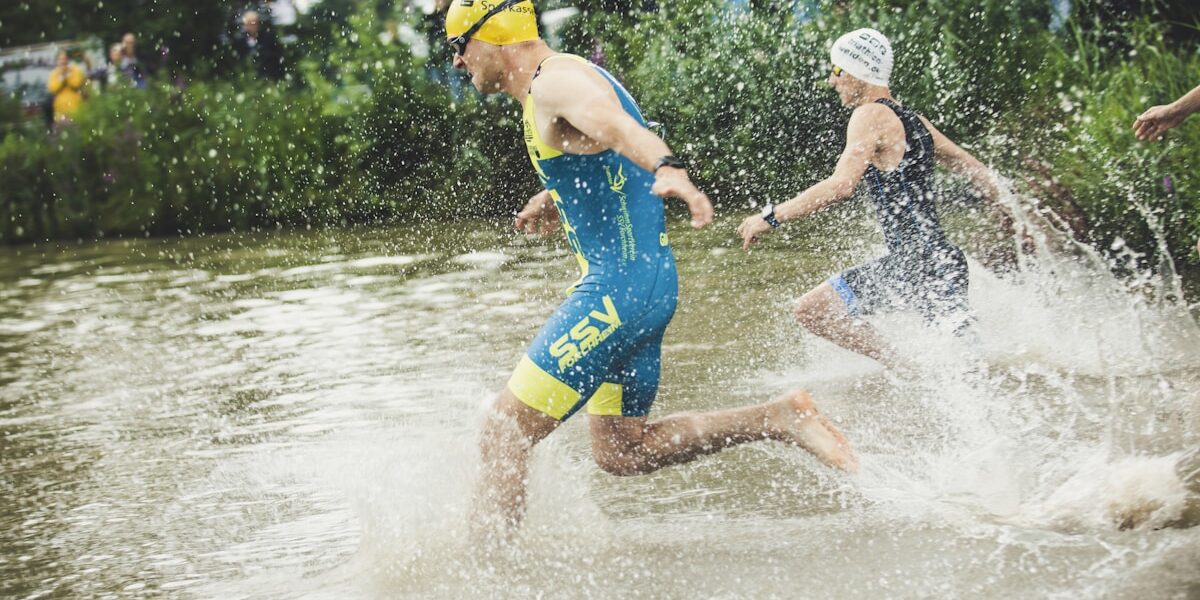
Stay calm during the swim start. Aggression and contact are common but manageable. If bumped, continue swimming. If panicked, flip to backstroke until you recover. The pack spreads out within the first 400 meters.
Celebrate crossing the finish line. You have accomplished something significant. Take a moment to appreciate what your body and mind just achieved.
Common Mistakes to Avoid
New equipment on race day is a recipe for disaster. Everything should be tested multiple times in training.
Neglecting transition practice leaves easy time on the course. Practice transitions weekly during your final month of preparation.
Going out too fast in any discipline catches up later. The triathlon rewards patience and consistent effort over aggressive early racing.
Comparing yourself to others during the race distracts from your own execution. Race your race, not someone else’s.
After the Finish Line
Recovery begins immediately. Walk, do not sit, for the first 15-20 minutes. Consume protein and carbohydrates within 30 minutes. Rehydrate throughout the day.
Take a week off or very easy training after your race. Your body needs time to repair the damage from race-level effort.
Reflect on your race, ideally with video if available. What worked? What surprised you? Where can you improve for next time? This analysis makes your next race faster and more enjoyable.
Most importantly, enjoy the accomplishment. You have joined a community of athletes who challenge themselves physically and mentally. Whether this is your only triathlon or the first of many, you have done something special.