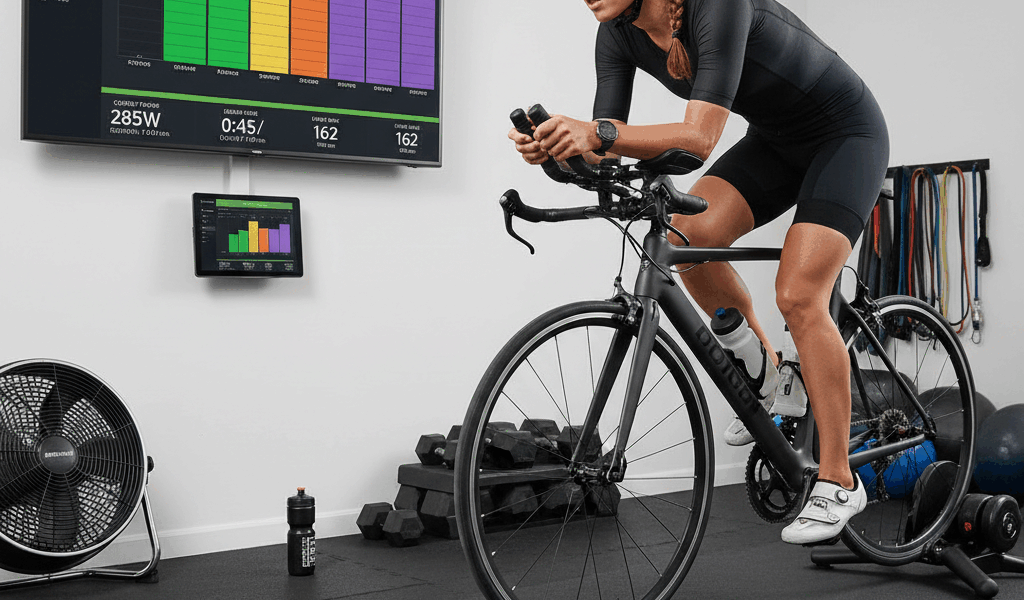
Training platforms have gotten confusing with all the marketing claims flying around. As someone who wasted hundreds of dollars testing TrainingPeaks, TrainerRoad, and Zwift over multiple training cycles, I learned which actually builds faster triathletes. Today, I will share it all with you.
Three platforms dominate triathlon training software. Each attracts loyal users who swear their platform is the answer. But after testing all three, the answer is more nuanced than platform fanboys admit.
The right choice depends on your training style, weaknesses, and how you stay motivated through long training blocks.
TrainingPeaks: Data Paradise, Motivation Desert
TrainingPeaks excels as a planning and analysis platform. It integrates with nearly every device and app, creating a central hub for all training data. The Performance Management Chart helps visualize fitness, fatigue, and form over time. Coaches love it for prescribing workouts and monitoring athlete compliance.
The weakness is engagement. TrainingPeaks does not make training fun. It documents what you do but provides little motivation during workouts. Athletes who struggle with indoor training often find TrainingPeaks clinical and boring. The interface prioritizes data over experience.
I am apparently one of those people who needs more stimulation during indoor sessions, and TrainingPeaks never provided that while the raw data analysis worked perfectly.
TrainingPeaks works best for coached athletes who receive prescribed workouts and want sophisticated performance tracking. Self-coached athletes may find the analysis overwhelming without context for interpretation.
TrainerRoad: Effective But Soul-Crushing
TrainerRoad focuses purely on structured training. The Adaptive Training system adjusts workout difficulty based on your performance, creating personalized progression without a human coach. The library contains thousands of workouts organized by training phase and specialty.
The strength is effectiveness. TrainerRoad workouts are hard but productive. The platform pushes you exactly as much as you can handle based on completed sessions. Athletes who follow the program consistently often see significant FTP gains.
The weakness is boredom. TrainerRoad workouts are intentionally simple – just power targets and time. There are no virtual worlds, no competition, no gamification. Some athletes thrive with this minimalist approach. Others quit after a few weeks of staring at power graphs.
That is what makes TrainerRoad challenging for us easily distracted types – the effectiveness is undeniable but the experience tests your mental fortitude.
Zwift: Fun That Sometimes Derails Progress
Zwift makes indoor cycling feel like outdoor riding. The virtual worlds, group rides, and races transform boring trainer sessions into social events. Time passes faster when you are racing other riders up a virtual mountain.
The strength is engagement. Athletes who hate indoor training often find Zwift tolerable or even enjoyable. The gamification elements tap into the same psychology that makes video games addictive.
The weakness is structure. Zwift workouts exist but are not as sophisticated as TrainerRoad. Many athletes get distracted by races and group rides, abandoning structured training for unplanned hard efforts. This can work during base season but undermines periodization during build phases.
Probably should have mentioned this earlier – I wasted an entire build phase chasing Zwift races instead of following my training plan.
The Swim and Run Problem
All three platforms originated in cycling. Swim and run functionality varies significantly. TrainingPeaks handles all three disciplines equally well since it just logs completed workouts. TrainerRoad recently added running features but cycling remains its strength. Zwift running exists but the user base is small compared to cycling.
Most triathletes end up using multiple platforms. A common combination is TrainingPeaks for planning and analysis, TrainerRoad or Zwift for cycling workouts, and a separate app for swim analysis.
Cost Comparison
TrainingPeaks premium runs about $120 annually. TrainerRoad costs around $190 per year. Zwift charges approximately $180 annually. Running all three totals nearly $500 yearly before you add coaching fees or other subscriptions.
Budget-conscious athletes often choose one platform and commit fully rather than spreading across multiple services.
Which Actually Builds Faster Triathletes
The platform you actually use consistently beats the theoretically superior platform you abandon after two weeks. TrainerRoad produces faster cyclists for those who complete the workouts. Zwift produces faster cyclists for those who would otherwise skip indoor sessions. TrainingPeaks produces faster triathletes for those who value data-driven training decisions.
Most serious triathletes eventually try all three and settle on a combination that matches their psychology. There is no universal right answer – only the right answer for your situation.
If you need external motivation and accountability, Zwift keeps you showing up. If you respond to data and can tolerate monotony, TrainerRoad delivers results. If you work with a coach and want comprehensive analysis, TrainingPeaks ties everything together.
Start with a free trial of each. Pay attention to how often you actually complete workouts, not just which platform seems most impressive. Consistency trumps optimization every time.