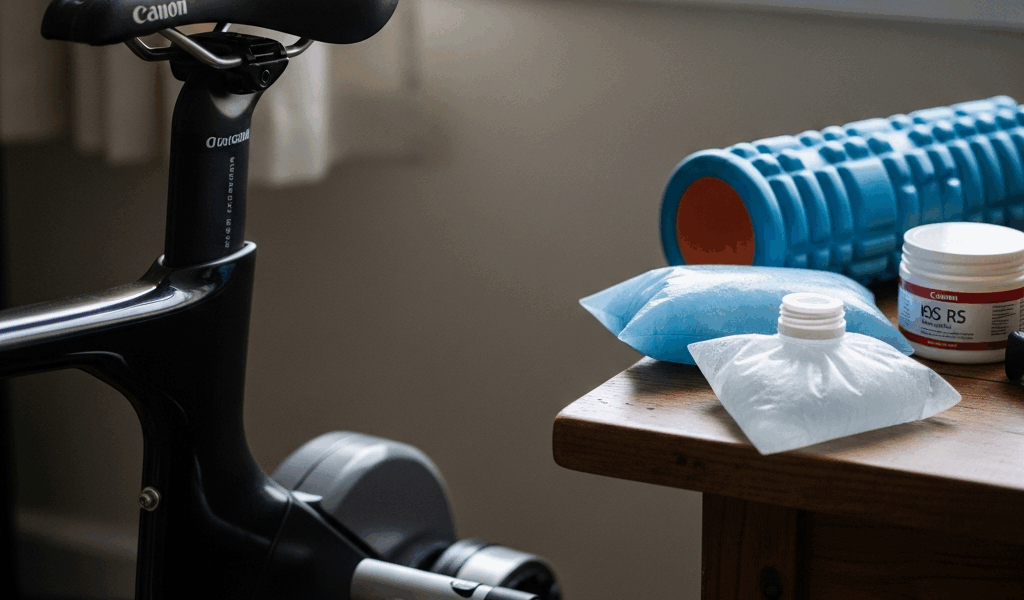
Why Tri Bikes Cause Different Saddle Sores
Saddle sore advice has gotten complicated with all the generic cycling noise flying around. As someone who spent two full seasons treating tri-specific sores like a road cyclist would, I learned everything there is to know about why that approach fails. Today, I will share it all with you.
But what is a triathlon saddle sore, really? In essence, it’s friction-based skin damage — but it’s much more than that. The aero position on a tri bike shoves your pelvis forward. Not slightly. Dramatically. Your sit bones stay engaged, sure, but the real pressure migrates onto soft tissue at the front of your saddle contact area. Road cyclists sit back on their sit bones. Weight distributes. Stability happens naturally. On a TT bike during longer efforts, you’re nose-down, hips rotated forward, and suddenly everything concentrates on a patch of skin that was never designed for that kind of sustained load.
Most cycling articles ignore this entirely. They’ll tell you to try better chamois cream or swap saddles — as if the problem is identical across every cycling discipline. It isn’t. Triathlon-specific sores are almost always anterior. They develop at the front of the perineal area, or on the labia majora in women, because that’s exactly where the aero position deposits you.
Frustrated by persistent sores despite doing everything “right,” I started tilting my saddle nose-down during an Ironman build — thinking it would relieve pressure using basic logic. It made things worse. The tilt pushed my pelvis even further forward and concentrated pressure exactly where it already hurt. Three weeks of recovery followed. I created that sore myself. Don’t make my mistake.
What actually works is keeping your saddle level — or even marginally nose-up — when you’re locked into aero position. Your body does the tilting. The saddle stays neutral. That single adjustment has resolved more tri-specific sores than any cream or new shorts combination ever will. That’s what makes this detail endearing to us long-course athletes who’ve tried everything else first.
The 48-Hour Test — Is It Getting Better or Worse
Probably should have opened with this section, honestly.
You can’t always pull two weeks off the bike during peak training blocks. That’s reality. So before you panic, before you email your coach, before you buy a noseless saddle — run the 48-hour test.
Stop riding. Completely. Stay off the bike for 48 hours minimum. Sore improves noticeably within that window — pain drops, redness fades, swelling recedes — you’re dealing with friction-based irritation. Good news. Fixable without medical involvement.
Sore doesn’t improve? Getting worse? Red streaks radiating outward, or a mild fever creeping in? You’re looking at infection or deeper tissue damage. Stop self-treating. Call a doctor.
The decision tree is simple:
- Improves in 48 hours: Friction-based. Preventive measures and modified training work.
- Gets worse or stays the same: Possible infection or abscess. See a doctor before riding again.
- Recurring sores in the exact same spot: Structural problem with your position or equipment. Fix the root cause, not the symptom.
I ignored this test once. Rode through what felt like basic irritation. What I actually had was an infected cyst in early stages — antibiotics and three weeks completely off the bike to resolve it. I’m apparently someone who learns things the expensive way, and ignoring a 48-hour window works for that outcome while stopping never does. Learn from that instead.
Prevention That Actually Works on a TT Bike
Once you’ve recovered from an active sore, prevention becomes non-negotiable. This isn’t theoretical. Do these things consistently or you’ll be back here in four weeks. So, without further ado, let’s dive in.
Chamois Cream Application for Long-Course Training
Apply chamois cream before you get on the bike — at least if you want any meaningful protection. Not after. Most people do this wrong. You want a thin, even layer covering the entire saddle contact area. Front and back. I use Assos Chamois Creme, $28 for a 200ml tube. Expensive. Worth it for efforts lasting longer than 90 minutes.
Application method: clean hands, dime-sized amount squeezed into your palm, spread across the inside of your chamois, work it in evenly. Don’t glob it on. Thick application creates bunching and new friction points. You want barely-visible coverage — not a paste.
For back-to-back training days, reapply fresh before each ride. One application covers roughly 90 minutes of hard effort comfortably. After that, you’re on your own.
Shorts Replacement — This Is Non-Negotiable
Wear the same shorts twice in one week and sores come back. Full stop. The chamois breaks down. Fabric loses elasticity. Bacteria accumulates even after washing.
You need at least three pairs of tri-specific shorts for consistent training. Not road shorts. Tri shorts. The padding density differs. Seam placement differs. The front panel runs flatter to accommodate aero position demands. That’s what makes tri-specific construction endearing to us long-course athletes — the details actually matter.
Replace pairs every 12 to 18 months of regular training. Quality tri shorts run $80 to $150. A neglected saddle sore that escalates can cost $2,000 in medical bills and lost training time. Do the math.
ISM Noseless Saddle — The Permanent Solution
Still getting sores after addressing position and chamois care? Switch to a noseless saddle. The ISM PN 3.0 runs $199 and was built specifically for tri position. No nose means zero anterior pressure. Your weight distributes entirely onto the two rear support rails. That’s it.
The transition takes a few rides. You feel strange. You feel like you’re sliding forward constantly. You’re not. By ride three or four, your body adapts — and then you understand exactly how much pressure you were tolerating before.
I was skeptical for months. Every tri article tosses out noseless saddle recommendations like they’re controversial. I finally tried one during an off-season block. Never went back. The sores stopped. Completely.
Saddle Tilt and Height in Aero Position
Your saddle height might be dialed perfectly on your road bike and completely wrong on your tri bike. The aero position changes everything — forward positioning, hip rotation, steeper seat tube angles.
Measure from the center of the crank spindle to the top of the saddle. Target roughly 109% of your inseam. But here’s the detail most guides skip: if you’re still developing anterior sores in aero position, your saddle may be 5mm too high. Drop it. Retest over two weeks of actual training before judging the result.
Saddle tilt baseline is level. Not nose-down. Not nose-up. Level. Adjust away from that only if you have a specific structural reason confirmed by a fitter — not because something feels off after one ride.
Treatment for Active Training Blocks
Sometimes you can’t take days off. Eight weeks from Ironman. A long-course race on the calendar. The saddle sore appears anyway.
Most triathletes panic and abandon training entirely. You don’t have to. You manage it aggressively while staying on the bike — carefully.
Benzoyl Peroxide Protocol
Sore is red and irritated but not infected? Benzoyl peroxide might be the best option, as surface saddle irritation requires fast bacterial control. That is because early-stage sores respond well before bacteria establishes deeper. Generic versions run $6 to $12 at any pharmacy — Clearasil works fine. Apply a thin layer twice daily. It dries out surface irritation and keeps bacterial overgrowth from taking hold.
Do not apply this and immediately sit on a saddle. Let it dry completely. Apply at night before bed and in the morning before breakfast. Ride only after it has fully set.
Warm Compress Routine
After every ride, apply a warm compress for 10 to 15 minutes. A clean washcloth soaked in warm — not hot — water. This cuts inflammation and promotes circulation without introducing new bacteria into the area.
Do this immediately post-ride, before showering. Then shower with fresh soap. Pat completely dry afterward. Moisture feeds bacteria. This sequence matters.
Modified Training While Healing
You can ride through minor saddle soreness — at least if you’re disciplined about these modifications:
- Shorten rides to 45 to 60 minutes maximum until the sore is 90% resolved.
- Stay off the tri bike during these shorter sessions. Use a road bike if you have one. Different saddle geometry, different position, different pressure points entirely.
- Skip two consecutive days per week — Sunday and Wednesday, for example. This breaks the friction cycle before it compounds.
- Spin easy. No hard efforts. Heart rate stays conversational throughout.
Pain gets worse despite these changes? Stop. See a doctor. Pushing through active infection doesn’t build fitness. It builds a surgical consult.
When Oral Antibiotics Are Needed
Red streaks, pus, fever, warmth to the touch — a doctor will prescribe oral antibiotics at that point. Usually doxycycline or amoxicillin. Typically a 7 to 10 day course.
During antibiotic treatment, stay completely off the bike. The bacteria has to clear before you reintroduce pressure and friction. That usually means 5 to 7 days of full rest, then cautiously shortened rides as the infection resolves.
When to See a Doctor
Some saddle sores need actual medical attention. Stop self-treating and make the call when you hit any of these:
- Hard lump persisting past two weeks of rest and treatment — Indicates an abscess or cyst that won’t resolve independently.
- Recurring sores in the exact same location within a month — You have a structural problem that prevention alone cannot fix.
- Red streaks radiating from the sore — Infection spreading through tissue planes. Antibiotics needed, possibly IV depending on severity.
- Fever or systemic illness alongside the sore — Sepsis is rare but real with infected saddle sores. This is urgent.
- Pus or discharge — Bacterial infection requiring drainage and antibiotics.
- Sore that resolves, disappears, then returns in the identical spot — An incompletely healed cyst or sinus tract. A dermatologist or colorectal surgeon can assess with ultrasound.
The barrier to entry is low. Call your primary care doctor first. Unfamiliar with sports-related saddle issues? Ask for a referral to a dermatologist or sports medicine specialist. In specific cases, a colorectal surgeon can provide imaging and a definitive diagnosis when nothing else is working.
I know this sounds excessive. Most saddle sores resolve with rest and a few equipment changes. But the ones that don’t? They steal weeks of training and sometimes require surgical intervention. Better to know early than guess for two months and lose your entire race build.


Stay in the loop
Get the latest triathlete today updates delivered to your inbox.