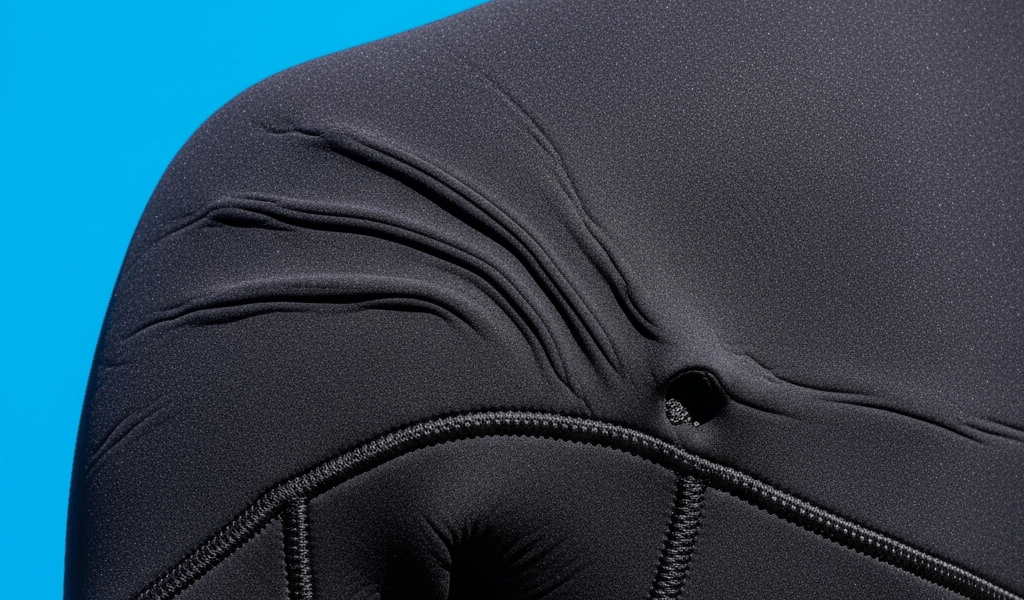
The Shoulder Rotation Problem in Open Water
You can rotate like a dolphin in the pool. Smooth. Efficient. Natural. Then you pull on a wetsuit and suddenly your shoulder feels locked in a vice grip.
This is the gap nobody talks about. Restricted shoulder rotation can shorten or alter a swimmer’s stroke in open water, making the wetsuit itself part of the problem rather than a source of speed and buoyancy.
Wetsuits are inherently restrictive. That’s their job—they insulate. Neoprene doesn’t stretch like skin. But bad fit takes a protective layer and turns it into a shoulder mobility killer. The difference between “tight but functional” and “I can’t exit the water smoothly” comes down to how the suit sits across your back, armpit, and chest.
Rotation matters because triathlon swimming isn’t about pulling hard. It’s about rotating efficiently to generate power from your core instead of your shoulders alone. Lose 10 degrees of rotation and you lose distance per stroke. You also lose the ability to breathe comfortably without turning your head excessively — in a 1.5K open water swim, that compounds into serious fatigue.
Probably should have opened with this section, honestly. I wore a restrictive suit for two entire seasons before I figured this out.
How to Diagnose if Your Wetsuit Fit Is the Culprit
Before you blame the suit, run this three-step test in your living room wearing the wetsuit. Do it dry.
Step one—arm circles. Do ten slow backward arm circles, full range. Your arm should trace a complete circle without the suit pulling your shoulder blade forward. If you feel tugging at the back of your shoulder, that’s a red flag. Make note of where exactly the restriction lives.
Step two—overhead reach. Raise both arms overhead and try to touch your palms together behind your head. This tests whether the chest panel and neck opening allow your shoulders to elevate properly. If your elbows stay flared out or you feel pressure across your upper back, the armhole is probably riding too high or the chest thickness is excessive.
Step three—rotation simulation. Simulate a freestyle stroke — rotate your torso side to side at the pace of your normal swim cadence. You should feel like your ribcage can twist freely. The suit should move with you, not against you.
Red flags that your fit is the problem: seams pulling at your shoulder blades when you rotate, armhole sitting so high it limits arm extension, obvious bunching of fabric across your chest, or a neck opening so snug it restricts shoulder shrug. If any of these appear during the test, the fit is the culprit, not your mobility.
One more detail—put the suit on correctly. Most people rush it. Pull it up evenly from both legs, smooth out the back panel, and make sure the shoulders are sitting in the natural shoulder valley, not riding up toward your neck. A poorly donned suit will feel wrong on purpose.
The 4 Fit Zones That Kill Shoulder Mobility
Wetsuits have hot spots. These are the four zones where fit determines whether you rotate freely or fight the suit all swim long.
Armhole depth. This is the first thing I check on any suit now. The armhole should allow your arm to hang naturally at your side while the opening still stays close to your torso. If the armhole is cut too shallow, it doesn’t give your shoulder blade room to move backward during the catch phase of your stroke. Too deep and water floods in. The sweet spot is suit-dependent — you should be able to fit one finger between your armpit and the suit edge when your arm is relaxed.
Chest and back panel thickness. This is where budget suits differ most from premium racing suits. A standard recreational suit might have 3mm-5mm neoprene across the chest and back. Racing suits often use 1.5mm-2mm blended materials in these zones. Thicker neoprene doesn’t stretch as much. Budget suits keep you warmer but restrict rotation. Premium racing suits sacrifice some insulation for mobility. If your suit is a $120 budget model, expect some restriction. A $300 racing suit will always outperform it for shoulder freedom, even if it’s less warm.
Neck opening height. The top of your shoulder socket lives near your neck. If the neck opening of your suit is cut high and tight, it mechanically limits how far your shoulder can shrug upward. This creates downstream problems — you compensate by rotating less and recruiting more neck muscles. Look at the suit’s neck opening when laid flat. It should sit approximately 2-3 inches below the base of your neck, not right at the collarbone.
Sleeve taper. The sleeve should taper gradually from shoulder to wrist. A suit with aggressive sleeve taper (narrow sleeves) restricts shoulder rotation because the narrowness pulls inward. You want a suit where the sleeve diameter gradually decreases. Some suits are cut like sausage casings from shoulder to elbow, which destroys rotation mechanics.
5 Fixes You Can Try Before Replacing Your Wetsuit
New suits are expensive. Before you spend $300-500, try these five fixes ranked by ease and effectiveness.
1. Fix your entry technique. Most people put on wetsuits wrong. Pull up each leg separately, centering the crotch seam, then work both arms in one at a time while keeping the suit low on your shoulders. Only then pull the suit up to your neck. Smooth out all wrinkles across the back panel. A correctly donned suit sits 2-3 inches lower than a rushed one, instantly improving shoulder mobility. I’ve added 15 degrees of rotation just by slowing down my entry process.
2. Warm the neoprene before swimming. Cold neoprene is stiff. Warm neoprene stretches. Spend five minutes in the wetsuit before entering the water — do arm circles, jog lightly, do jumping jacks. Neoprene becomes more pliable after gentle movement and slight body heat increase. This isn’t permanent, but it buys you better mobility for the first 500 meters when it matters most.
3. Target shoulder stretching before the race. Spend three minutes doing cross-body shoulder stretches, doorway chest stretches, and sleeper stretches while wearing the suit. Focus on the external rotators. This preps your shoulder to work within the suit’s restrictions rather than fighting them. It’s not fixing the suit, but it’s priming your body.
4. Use silicone-based lubricant on your shoulders. Apply a thin layer of water-resistant silicone lubricant to your shoulders, neck, and upper back before putting on the suit — I use Radian-X or similar triathlon-specific products, roughly 50-75 cents per application. This reduces friction and allows the suit to slip slightly rather than bind. It works particularly well if your seams are the primary culprit.
5. Size up strategically on your next purchase. If your current suit is a 4/3 in your true size, the next purchase should be a 4/3 in a size up. Not a full size up in everything — just armhole flexibility. Some brands (premium racing lines especially) run tighter than recreational lines. One size difference in shoulder fit can add 20 degrees of rotation without sacrificing warmth.
Real talk — if you’ve tried all five and your rotation is still compromised, the suit is the limit. That’s when replacement makes sense.
What to Look for in Your Next Wetsuit
You don’t need the most expensive suit. You need the right suit for your shoulders.
Prioritize armhole design over brand prestige. Examine the back seam placement — it should sit on your shoulder blade, not across it. In the shop, put on the suit and simulate your stroke. Rotate your torso forcefully. If you feel binding, walk away. A $200 suit with excellent shoulder mobility beats a $400 suit that restricts you every single time.
Check the neoprene blend. Racing suits use blended materials (often 50% neoprene, 50% limestone-based compounds) that stretch more than pure neoprene. The blend costs more but gives you the rotation you need. Budget pure neoprene feels more restrictive until it’s broken in.
Test the neck opening height in the store. Put it on fully and try to shrug your shoulders. Your shoulders should elevate smoothly. Ask the shop staff about the armhole dimensions if they have spec sheets — some brands publish this.
Finally, ask about return policies. Many retailers allow 30-day returns on unused suits. Buy two in different fits, test them in open water, keep the one that doesn’t fight your shoulder rotation.

Stay in the loop
Get the latest triathlete today updates delivered to your inbox.