Spring is the most important training block of the year for triathletes. The base work is done (or should be), your first race is probably 8-12 weeks out, and now it’s time to sharpen all three disciplines without burning out before race day. Here’s a practical training framework for the spring build phase.
The Weekly Structure
Most age-group triathletes can handle 8-12 hours of training per week during the spring build. If you’re targeting a sprint or Olympic distance, stay closer to 8. If you’re building toward a half-iron distance, aim for 10-12. Going above that as an amateur with a job and family usually costs more in fatigue and stress than it gains in fitness.
A solid weekly structure looks like this: three swims, three bikes, three runs, and two strength sessions. Yes, that’s eleven sessions. Some of them overlap — a bike-run brick counts as two. And your strength sessions can be short (20-30 minutes) and focused on injury prevention rather than muscle building.
Distribute intensity carefully. No more than two high-intensity sessions per week across all three sports. The rest should be easy to moderate. That ratio feels wrong to competitive people, but the research is clear: roughly 80% easy and 20% hard produces better race results than a 50/50 split.
Swimming: Build Speed on Top of Endurance
Your winter swim base should have you comfortable holding a steady pace for 2,000-3,000 meters continuously. Now it’s time to add speed. Replace one of your three weekly swims with an interval session focused on threshold work.
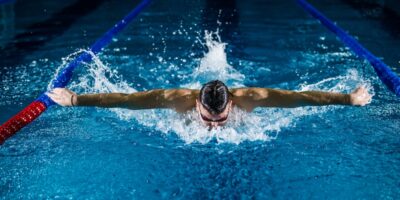
A solid spring swim workout: 400 warm-up, 8×100 at your target race pace with 15 seconds rest, 200 easy, 4×50 at slightly faster than race pace with 10 seconds rest, 200 cool-down. Total distance: about 2,200 meters. Total time in the pool: 45-50 minutes.
If open water is available, get in it at least twice before your first race. Pool fitness doesn’t fully transfer to open water. Sighting, drafting, and dealing with chop are skills that require practice in the environment you’ll race in.
Cycling: Sweet Spot Training
The bike leg is where most age-groupers have the most room for improvement because it’s the longest discipline and the one where aerobic fitness matters most. Spring is the time for sweet spot work — efforts at 85-95% of your functional threshold power (FTP). If you don’t train with power, sweet spot feels like “comfortably hard.” You can talk, but only in short sentences.
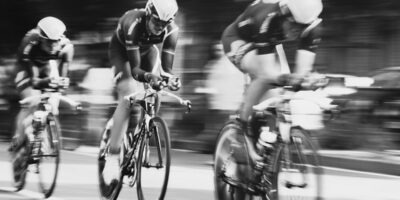
A key spring bike workout: 20-minute warm-up, 2×20 minutes at sweet spot with 5 minutes easy between, 15-minute cool-down. Do this once per week. Your second bike session should be a longer endurance ride at easy pace. The third can be a brick session — 45-60 minutes on the bike followed immediately by a 15-20 minute run.
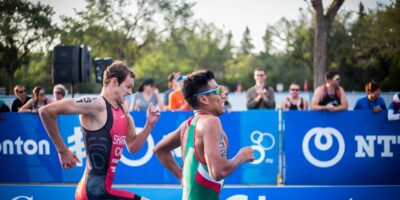
The brick run is critical. Your legs need to learn what running off the bike feels like. The first time you do it in training instead of on race day, you’ll thank yourself. Start the run easy and let your legs find a rhythm. Don’t worry about pace for the first five minutes.
Running: Protect Your Legs
Running is where injuries happen in triathlon. Your legs are absorbing impact while also handling bike and swim fatigue. Keep your run volume moderate and your intensity focused.
One tempo run per week is enough: 10-minute warm-up, 20 minutes at half-marathon effort, 10-minute cool-down. Your second run should be easy — conversational pace, flat terrain, enjoy it. Your third run is the brick mentioned above.
If anything starts hurting — knees, shins, Achilles — back off the run volume first. You can maintain run fitness with less volume more easily than you think, especially when your swim and bike fitness are carrying the aerobic load.
Nutrition and Recovery
Spring training is where you dial in your race nutrition strategy. Practice eating and drinking on the bike during your long rides. Practice taking gels during your tempo runs. Your stomach needs training just like your muscles. Find out what works now, not on race morning.
Sleep is your best recovery tool. Eight hours minimum during heavy training weeks. If you can’t get eight at night, a 20-minute afternoon nap works wonders. Every hour of sleep is worth more than any recovery gadget you can buy.
Your first spring race is a data collection event, not a performance test. Race it, learn from it, adjust your plan for the next one. The real peak comes later in the season.

Stay in the loop
Get the latest wildlife research and conservation news delivered to your inbox.