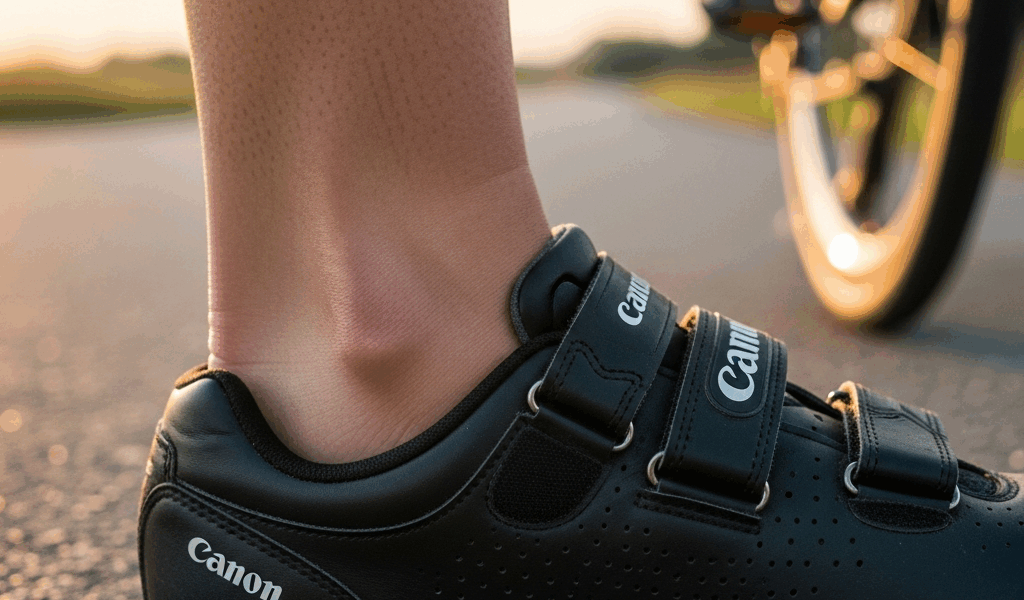
Why Foot Swelling Hits Harder in Triathlon Than Regular Cycling
Foot swelling in triathlon has gotten complicated with all the conflicting advice flying around. Some people blame hydration. Others blame shoes. A few blame the heat. Honestly? It’s all three — and they gang up on you in ways that a casual Tuesday night ride never will.
Four hours into that bike leg, my toes were pressing against the inside of my tri shoes hard enough that I could feel my heartbeat in my metatarsals. I still had 90 minutes left on the bike. My feet stayed swollen for three days after the race. Three days.
A 90-minute club ride won’t trigger this response. A four- to five-hour triathlon effort absolutely will. Here’s why the math changes so dramatically.
When you’re locked into an aero position on tri bars — your pelvis tilted forward, feet slightly plantarflexed, calves basically static — you’re shutting down the calf muscle pump that normally pushes blood back up toward your heart. Gravity pulls fluid downward. Your leg muscles, which usually contract and release to move fluid upward, go nearly motionless. Fluid accumulates. Feet swell. It’s that simple and that miserable.
Heat amplifies everything. On a hot race day your cardiovascular system starts prioritizing skin blood flow to dump heat. Your feet get vasodilation just like every other extremity, but the immobilized position prevents efficient return. You’re sending blood out to your feet while simultaneously blocking the return route. The math doesn’t work.
Stack sodium confusion on top of that — which I’ll get to shortly — and you’ve got a swelling situation that never touches someone hammering a local 40-miler on a Wednesday evening.
The Cleat and Shoe Fit Issues Most Triathletes Overlook
Probably should have opened with this section, honestly. The single most fixable cause of foot swelling in triathlon is buying shoes that fit wrong from the very start.
Here’s the trap. You try on tri shoes at 8 a.m. Saturday morning at your local tri shop. Feet are fresh, slightly dehydrated from sleep, sitting at their smallest size of the day. They feel fine. You buy them. Then mile 45 of your race arrives, your feet have swollen half a size, and those shoes have become compression sleeves clamped directly over your metatarsal heads.
Tri shoes run notoriously tight compared to road cycling shoes — designed for minimal weight and fast transitions. Great for T1 and T2. Terrible when your feet start expanding.
Cleat position matters just as much. Mount your cleats too far forward — a common choice chasing power transfer — and you’re loading your forefoot constantly. The metatarsal heads take the pressure. Blood flow through the plantar arteries gets restricted. Swelling follows. I made this exact mistake for two full seasons before a bike fitter measured my foot and shifted my cleats back 8mm. Eight millimeters. That’s it. The difference was noticeable by mile 30 of my next long ride.
Your shoe closure system determines how much you can actually adjust mid-race. BOA dials — like those on the Shimano RC702 or Lake CX403 — let you micro-adjust tension without pulling over or removing your shoe. Velcro straps tighten unpredictably as your foot swells. Laces are laces. You’re not touching them once you clip in.
I’m apparently a wide-foot person and the Lake CX403 works for me while narrower Sidi models never did — even when I sized up. Don’t make my mistake. Try shoes on in the afternoon when feet are at their largest. Buy a half size bigger than you think you need. Your feet at mile 80 will remember that decision.
And the sock cuff. Tight elastic at the ankle restricts circulation in ways that feel trivial until hour three when your arch starts aching. I switched to CoolMax socks with loose cuffs — the Swiftwick Aspire Zero if you want specifics — and noticed less arch swelling almost immediately on long training rides.
Heat, Sodium, and Hydration — Getting the Balance Right
But what is the actual swelling mechanism here? In essence, it’s an electrolyte and fluid distribution problem. But it’s much more than that — and the two main causes are nearly opposite, which is what makes this so easy to get wrong.
Overhydration on the bike dilutes your blood sodium. You’re drinking 750ml per hour of plain water because some generic sports science chart told you to. After three hours, sodium concentration drops. Your body holds water trying to normalize osmolarity. Feet puff up. This is hyponatremia — it’s real in triathlon, especially on hot days when athletes panic-drink to stay cool.
Underhydration — or more precisely, inadequate sodium intake — works differently. Blood becomes more concentrated. Your body conserves fluid. But that retained fluid tends to pool in your extremities because your cardiovascular system is defending core temperature and organ perfusion first. The result: swelling and muscle cramps simultaneously. Both at once, which is a special kind of awful.
The fix is sodium timing, not just fluid volume. Aim for 300–500mg of sodium per hour depending on your sweat rate and ambient temperature. One SaltStick capsule is 215mg. One serving of Gatorade Endurance is roughly 200mg. Those are your benchmarks. That hourly sodium intake prevents both hyponatremia and the fluid pooling that comes with sodium depletion.
Pre-race sodium loading — salty dinner the night before, salty breakfast morning-of — does help. It’s not the whole answer. You still need steady intake during the ride itself.
On a 90-degree race day, plain water is your enemy. It makes foot swelling worse, not better. That’s the part nobody tells you until after.
Position and Movement Fixes for Long Rides
So, without further ado, let’s dive into what you can actually do once you’re on the bike.
Saddle height directly affects venous return from your legs. Too high and your leg extension becomes excessive — calf pump weakens. Too low and you’re fighting gravity harder than necessary. A proper tri-specific bike fit — not a road fit adapted for aero bars — ensures your saddle height is optimized for the actual position you’ll hold for four hours, not the upright position most fitters default to when they measure.
Standing out of the saddle for 30-second intervals every 15 minutes reactivates your calf muscles. Blood moves. Foot swelling either plateaus or pulls back slightly. You don’t need to stand the whole time — just enough to break the static compression that’s been building since mile one.
Foot movement cues while seated help too. Drop your heels occasionally. Splay your toes inside the shoe. These micro-movements engage your foot’s intrinsic muscles and disrupt the static pooling pattern. Feels tiny. Works.
If your tri bars are set too low or too far forward, you’re forcing excessive plantarflexion and pinching circulation through the metatarsal region continuously. A thorough bike fit checks this. Most don’t. Worth asking specifically about it.
Race Day Checklist to Prevent Swelling Before It Starts
- Buy tri shoes a half size larger than your normal road shoe size — try them on in the afternoon or evening, not first thing in the morning
- Mount cleats slightly rearward, 8–10mm behind the metatarsal head, rather than forward for maximum power transfer
- Use socks with loose ankle cuffs, not compression-style elastic
- Get a tri-specific bike fit that measures cleat position, saddle height, and bar geometry in your actual aero position
- Consume 300–500mg sodium per hour via electrolyte drink or capsules — not plain water alone
- Stand out of the saddle for 30 seconds every 15 minutes to reactivate the calf pump
- If swelling starts mid-race, loosen your shoe closures immediately — don’t wait until transition to deal with it
That’s what makes this problem endearing to us triathletes — it’s entirely fixable once you know which levers to pull. Mild swelling during a five-hour effort is normal. Painful swelling, numbness, or swelling that lingers more than a few hours post-race? See a sports medicine doctor. But most triathlon foot swelling responds to the right shoe size, a solid sodium strategy, and a little intentional movement on the bike. Small changes. Big difference by mile 80.

Stay in the loop
Get the latest triathlete today updates delivered to your inbox.