Triathlon GI Shutdown Has Gotten Complicated With All the Conflicting Advice Flying Around
Today, I’ll share it all with you.
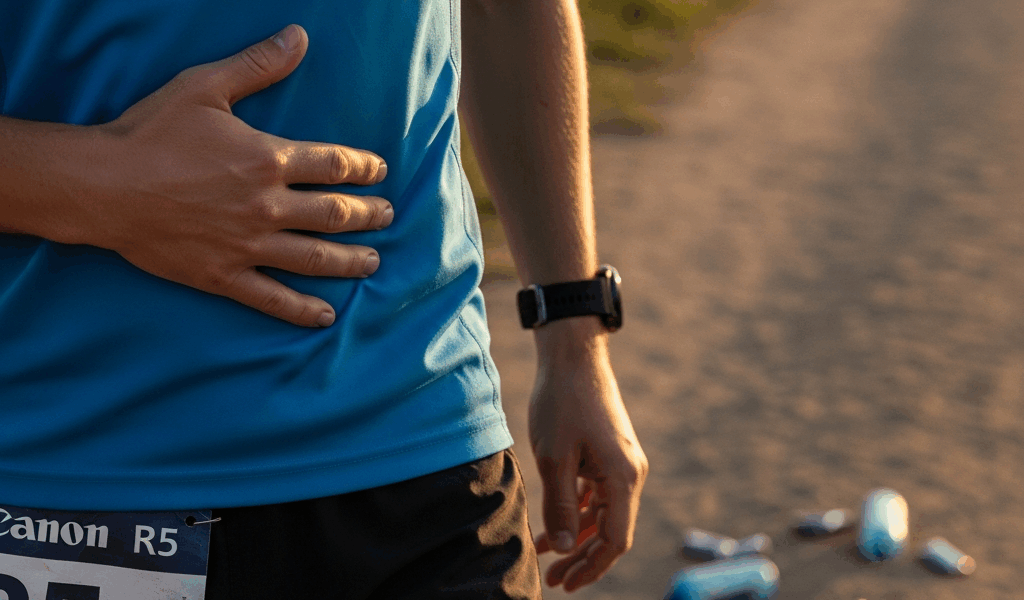
Here’s the part nobody explains clearly: your stomach doesn’t shut down on the run. It shuts down on the bike. Sometimes earlier. The run is just where the bill arrives.
About 90 minutes before your legs ever hit pavement, your body made a ruthless priority decision. Blood gets pulled away from your digestive tract and rerouted to working muscles and skin. Hard swim effort triggers it. Early bike intensity locks it in. This isn’t your gut being weak — it’s your sympathetic nervous system doing exactly what it evolved to do. Survive first. Digest later.
Pile heat, adrenaline, and dehydration on top of that, and your gut essentially closes up shop. Gastric emptying slows to almost nothing. Motility tanks. Your intestines lose their rhythm entirely. Then you start the run, and by mile 2, you’re paying for choices made an hour earlier. The nausea, the brick-behind-the-sternum feeling, the sudden inability to even look at another gel — symptoms of a cascade that started long before T2.
After my 2019 DNF, I spent weeks convinced my gut was the problem. It wasn’t. My fueling strategy was. Don’t make my mistake.
How the Bike Sets Up Your Stomach to Fail
The bike leg is where most triathletes plant the seeds of GI disaster — usually without realizing it until they’re shuffling through mile 4 of the run wondering what went wrong. Two mistakes dominate.
Eating Too Much, Too Fast, Too Early
You exit the swim feeling weirdly hungry. The bike feels strong. So you load up — energy bar at mile 5, gel at mile 15, another at mile 25. That’s 400 calories in roughly 45 minutes, while your gut is still semi-anaerobic from swim effort and your core temperature is climbing toward whatever the ambient heat is doing to you.
Now your stomach contains a traffic jam. Half-digested solids competing with the fluid you’re drinking to stay hydrated. Gastric emptying grinds to a halt. Nothing moves. Everything just sits there. You feel it — that heavy, wrong feeling right behind your sternum.
High-Osmolality Foods in the Heat
Probably should have opened with this section, honestly. Osmolality is just the measurement of dissolved particles in your food or drink. Standard energy bars and most commercial sports drinks sit high on that scale. In heat — especially with core temperature already elevated — your intestines struggle to absorb concentrated solutions. Instead of fluid moving into your bloodstream, water gets pulled into your gut to dilute whatever you just consumed. Bloating follows. Then sloshing. Then distension that feels like you swallowed a water balloon.
I’m apparently someone with a particularly unforgiving gut on race day, and Maurten works for me while standard gels and dense bars never do. Took me three race seasons to figure that out.
Then comes the run. Gravity and impact jarring an already-miserable digestive system. That’s usually where the wheels fall completely off.
Signs Your Gut Is Already in Trouble Before the Run
Most triathletes ignore these signals until it’s too late. Here’s what to watch for on the bike — and take seriously when you notice them:
- Bloating or fullness that doesn’t improve after 30 minutes — Your gut is overwhelmed, not just satisfied. There’s a difference.
- Nausea starting on the bike — This is not a run problem. This is a bike problem wearing a run disguise.
- Sloshing or fluid movement in your stomach — Food isn’t settling. Gastric emptying has stalled out.
- Excessive belching — Gas from undigested carbs being fermented by gut bacteria. Happens faster when heat is involved.
- Lack of thirst despite heavy sweating — Counterintuitive, but a real warning sign. Thirst signaling depends on a functioning digestive system. When the gut shuts down, that signal goes quiet.
- Sudden aversion to your planned nutrition — You planned to eat that gel at mile 40, but the thought makes you gag. That’s your gut talking. Listen to it.
The problem is that most competitors rationalize these signals away. “I’m just nervous.” “I’ll feel better once I’m running.” They won’t. That’s the lie race-day adrenaline tells you — and it’s convincing right up until you’re walking the back half of the run course.
If any of those are happening mid-bike, your run nutrition plan is already compromised. You’re not pushing through nausea that started on the bike. You’re managing it.
How to Fix It Without Gutting Your Fueling Plan
The fix isn’t “eat less.” That’s fear-based advice that leaves you bonking at mile 8 of the run — trading one problem for a worse one. The actual fix is eating smarter across three distinct phases.
Phase 1: Swim Exit to Mile 15 of the Bike
Your gut is still recovering from swim effort. Core temp is still climbing. Blood flow to your digestive system is restricted.
Skip solid food entirely here. Aim for 200–250 calories via liquid or semi-liquid sources — a 16 oz serving of Gatorade Endurance Formula (about 80 calories per 8 oz, so roughly 160 calories there), or a single gel taken with 8–12 oz of water. Spread that across 20–30 minutes rather than all at once.
Liquid calories empty faster than solids. No brick feeling. No sloshing. Your gut gets fuel without getting overwhelmed.
Phase 2: Miles 15–50 (or Your Bike’s Second Half)
This is your window for solid calories. Core temperature has stabilized somewhat. Your gut is waking back up. Blood flow is normalizing.
Target 40–60 grams of carbohydrates per hour using lower-osmolality options — diluted sports drink, rice cakes, plain bagels, or purpose-built nutrition designed for gut tolerance in heat. Maurten gels are research-backed for this, running around $2.50 per gel. SIS Beta Fuel is another solid option at similar price points. Both are worth testing in training before race day.
Skip dense energy bars unless they’re specifically formulated for high-heat conditions. A regular bar is 45-plus grams of carbs in a concentrated solid package. In 85-degree heat, that’s a gamble — and usually a losing one.
Fluid intake should run 16–20 oz per hour, mostly water with electrolytes, keeping concentrations moderate. Don’t try to catch up on hydration by slamming a full bottle of sports drink at once. That’s how you create the exact osmolality problem described earlier.
Phase 3: Final 20–30 Minutes of the Bike
Shift almost entirely back to liquids. One last 100–150 calories from a diluted drink or a single gel. Energy stays topped off, but nothing heavy is sitting in your stomach when you hit T2.
But here’s the part most articles skip: none of this works unless you practice it. Not in long runs. In brick workouts — back-to-back bike-run sessions at race intensity, where your nutrition strategy faces actual stress. A 90-minute bike followed by a 30-minute run, done once every 2–3 weeks, at race-day effort. That’s the environment your gut needs to adapt to.
Gut tolerance is trainable. It just requires repetition under the right conditions. Generic “eat more, eat less” advice ignores that entirely.
Race-Day Protocol to Keep Your Stomach Running
On race day, run through a simple three-step check before you even mount the bike:
- Plan your bike nutrition in three phases, written down, with specific times and specific products. Not vague. Not “a gel somewhere around mile 20.” Specific — product name, quantity, timing, paired fluid.
- Test every single fuel source in training. Your stomach on race day will not forgive surprises. Not once.
- Slow the first mile of the run intentionally — at least if you want the back half to be worth anything. Drop goal pace by 20–30 seconds per mile. Let blood flow redistribute. Let your gut settle. You’ll recover those seconds after mile 2, when your digestive system can actually handle the demands of pace and impact combined.
One more thing, and it matters more than most people acknowledge: check whether you’re starting the race already dehydrated or under-fueled. Chronic under-eating in the 72 hours before a race makes every GI problem significantly worse. Eat normally for the three days leading in. Hydrate the night before — actual hydration, not just a glass of water with dinner. Hydrate the morning of.
GI shutdown on the run is genuinely frustrating. It’s also genuinely fixable. The fix just requires tracing the problem back to where it actually started — not on the pavement, but on the bike, in the choices you made about what to eat and when. Change those decisions, and the run changes with them.

Stay in the loop
Get the latest triathlete today updates delivered to your inbox.